
1. Why Bulk SMAS Procurement Is a Double-Edged Sword for PCE Producers
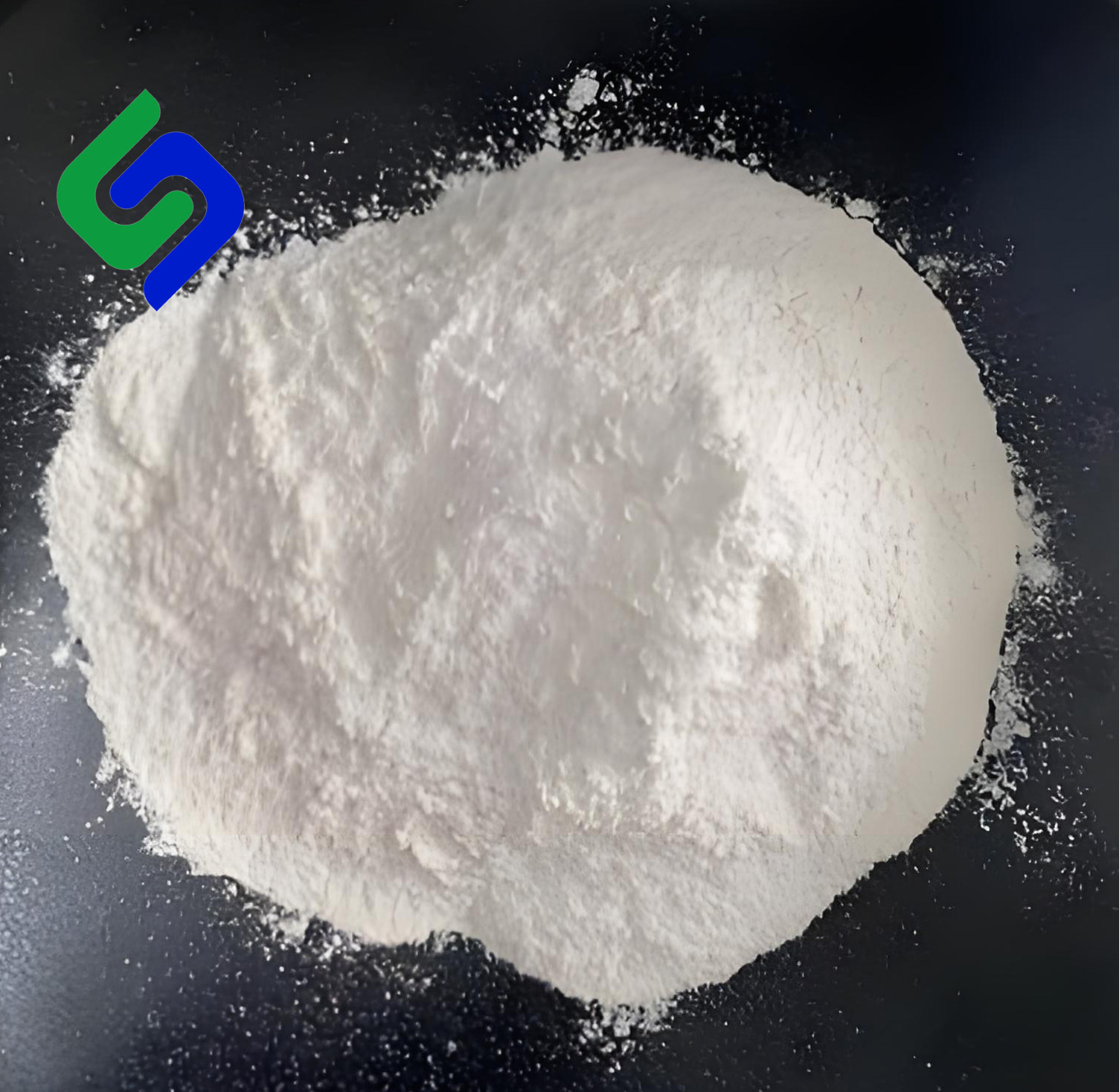
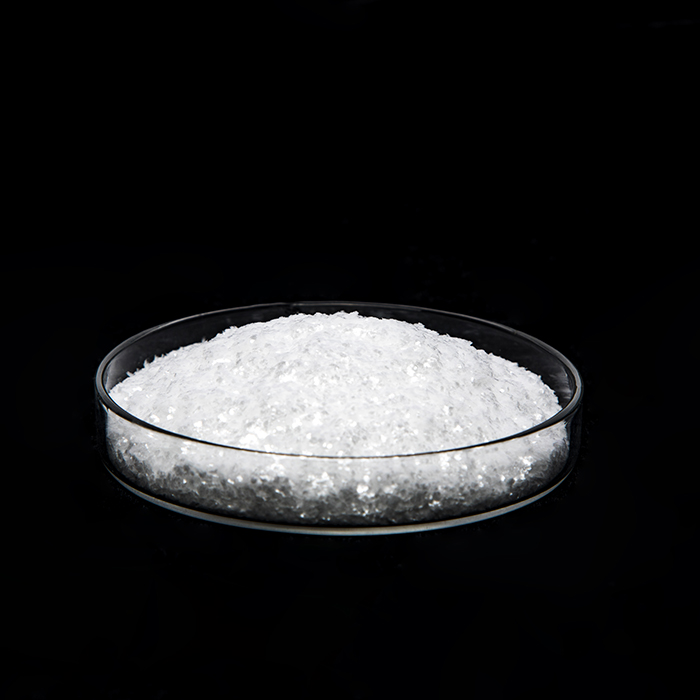
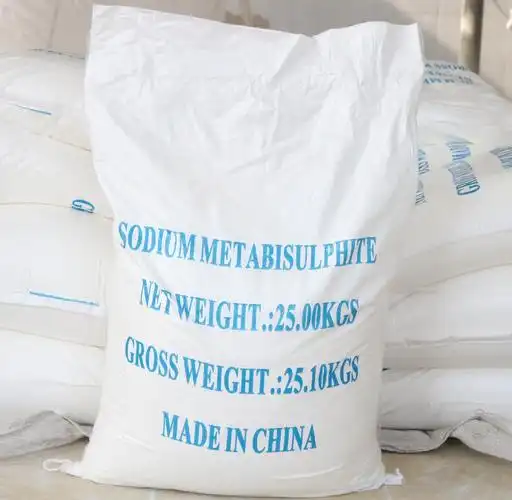
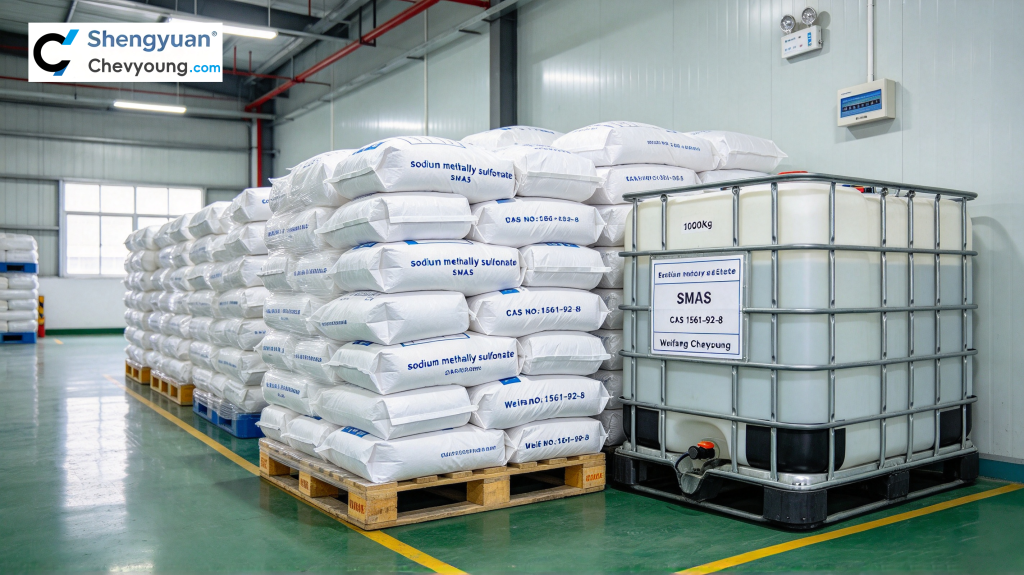
Sodium methallyl sulfonate (SMAS, CAS NO.:1561-92-8) is a cost-critical sulfonate co-monomer and chain-transfer agent in polycarboxylate ether (PCE) superplasticizer production. On one hand, buying SMAS in 25 kg bag or 1000 kg IBC / tank-truck bulk delivers 10–25% unit-price saving versus lot-by-lot purchase, stabilizes the supply chain against monomer price cycles, and lets plants plan polymerization campaigns without interruption. On the other hand, SMAS is hygroscopic, light-sensitive, carries trace ionic impurities that propagate into the polymer, and — because it doubles as a chain-transfer agent — even a small batch-to-batch shift in active content moves the molecular weight of the whole PCE batch. The industrial question is therefore not “should we buy in bulk?” but “what procurement and QC system lets us capture the bulk discount without letting finished-PCE slump, water-reducing ratio or molecular weight drift out of spec?”
2. The Hidden Cost Drivers That Bulk Procurement Can Create
Before negotiating volume price, building material factories must quantify the cost risks hidden inside bulk SMAS lots:
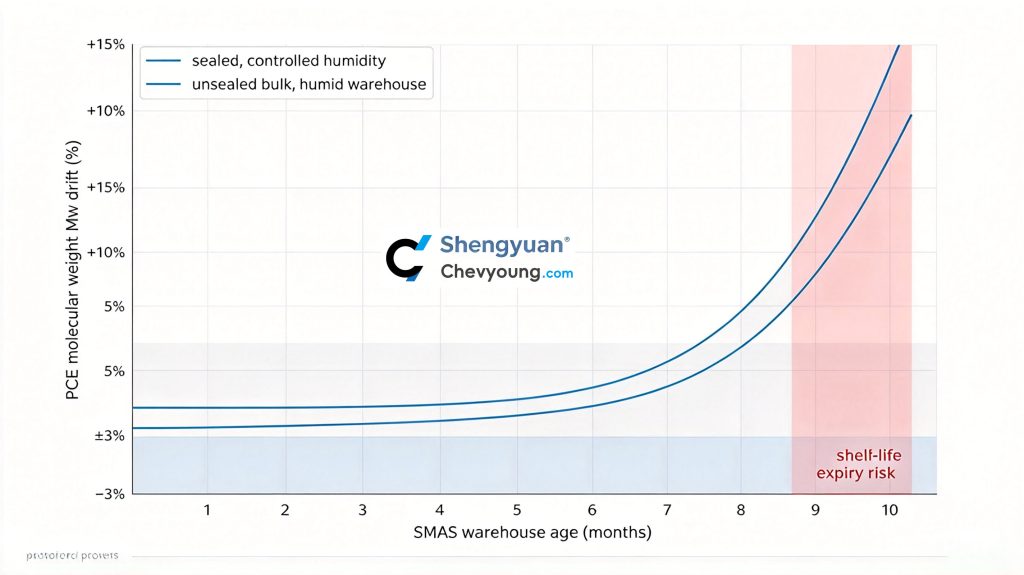
- Moisture uptake in opened bulk stock: SMAS readily absorbs atmospheric water. A 0.5% moisture rise is acceptable on a fresh COA, but after weeks in an unsealed IBC in a humid warehouse it can climb to 1.5–2.5%, diluting active monomer and altering chain-transfer dosage.
- Caking and inhomogeneity: Stacked bulk bags under pressure form lumps. If the lumps are not re-homogenized before dissolution, local overdosing of SMAS shortens PCE chains in patches.
- Trace ionic impurities: chloride, sulfite and Fe²⁺ residuals in low-grade SMAS act as radical inhibitors or catalyst poisons during polymerization, lowering conversion and raising residual monomer.
- Shelf-life clock: Typical SMAS shelf life is ~12 months. Buying 6-month inventory at once means the last batch is already near expiry, with slow de-sulfonation and color drift. These costs routinely erase the 10–15% bulk discount if QC and warehouse discipline are weak.
3. Incoming QC: The Minimum Specification Every Bulk SMAS Lot Must Clear
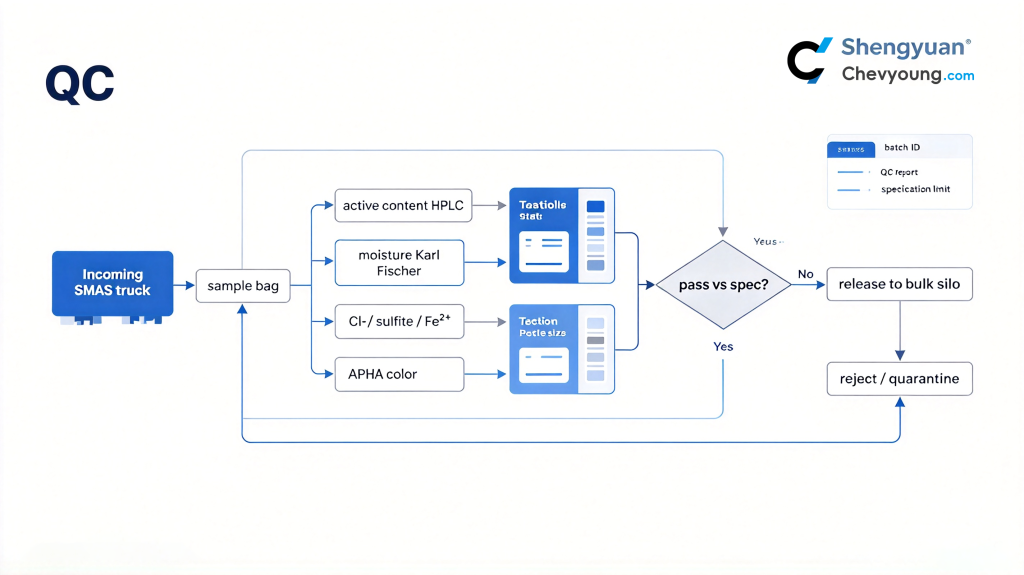
Industrial-grade SMAS (CAS NO.:1561-92-8) is commonly specified at ≥99.5% active content, ≤0.5% moisture, Cl⁻ ≤0.03–0.035%, Na₂SO₃ ≤0.02%, Fe²⁺ ≤0.4 ppm and APHA color ≤10–15. Bulk procurement contracts should write these as mandatory acceptance criteria rather than reference values:
| Test item | Typical spec | Why it matters to PCE stability |
|---|---|---|
| Active content (HPLC) | ≥99.5% | Directly sets chain-transfer dosage → PCE MW |
| Moisture (Karl Fischer) | ≤0.5% | Water shifts dilution and pH in feed tank |
| Cl⁻ | ≤0.03% | Chloride accelerates rebar corrosion risk, limits end-use |
| Na₂SO₃ / sulfite | ≤0.02% | Radical scavenger → lowers conversion |
| Fe²⁺ | ≤0.4 ppm | Oxidation catalyst → discoloration, premature gel |
| APHA color | ≤15 | Colored finished PCE rejected by precast customers |
| Particle / bulk density | declared ±5% | Feeds dissolution and dosing consistency |
A fast in-plant check (moisture meter, conductivity, 10% solution clarity, colorimeter) plus a third-party HPLC reference on each truckload gives factories the data to reject off-spec lots without waiting two weeks for supplier COA confirmation.
4. Warehouse and Inventory Strategy: Match Bulk Lot Size to Shelf Life
The optimal bulk procurement volume is bounded by the shelf-life / consumption ratio, not by maximum price discount. A plant consuming 2 t/month should not order a 20 t stockpile simply because the per-tonne price looks attractive. Recommended practice:
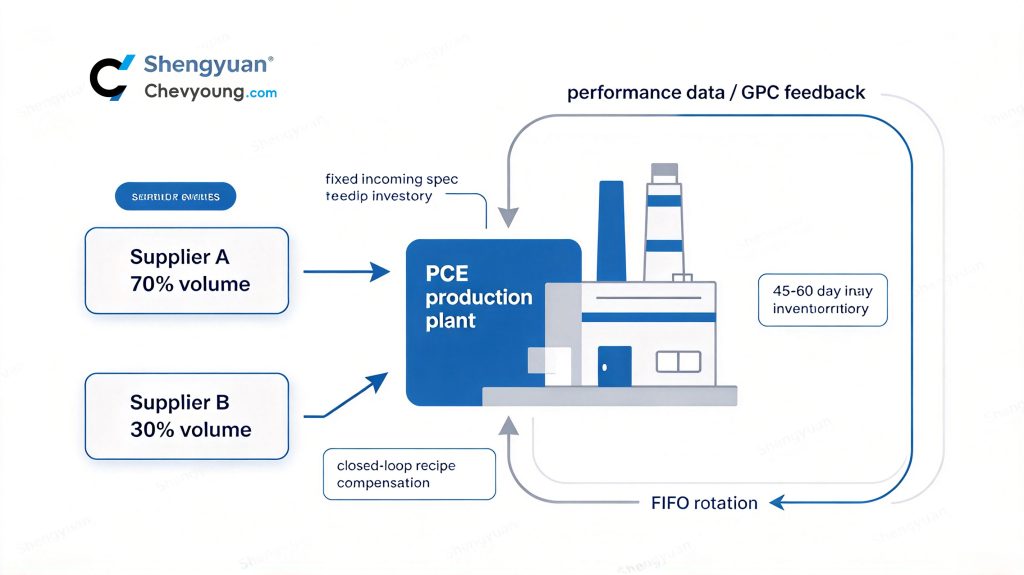
- Cap working inventory at 45–60 days of normal consumption, plus one safety lot.
- Store sealed, on pallets, below 40 °C, relative humidity <60%, away from direct sunlight.
- Rotate by FIFO, and re-test moisture and color for any lot held >6 months.
- Re-seal opened bags immediately; do not pour the whole IBC into an open day tank. This “smaller but frequent” bulk strategy keeps unit price ~8–12% below spot while avoiding the degradation losses that eat deeper into margin.
5. Recipe Buffer and Batch-to-Batch Compensation
Because SMAS is simultaneously a sulfonate monomer and a chain-transfer agent, PCE polymerization is sensitive to small active-content drift. Stable factories do not freeze the SMAS dosage; they use a closed-loop compensation recipe:
- Each incoming lot gets a measured active-content and moisture value.
- The DCS recipe automatically recalculates SMAS mass to deliver the target active-monomer equivalent (e.g. 2.0 wt% of total monomers).
- Initiator and chain-transfer agent (mercapto propionic acid) are trimmed by a pre-defined factor when SMAS active content drifts >0.5%.
- A small “calibration batch” (50–100 L) is run when a new supplier lot arrives, GPC-checked for molecular weight, before the full campaign is launched. This turns raw-material variation into a controlled process variable rather than a quality surprise.
6. Dual-Sourcing and Supplier Qualification to Protect Stability
Single-source bulk buying maximizes price concession but also maximizes supply and quality risk. Mature PCE producers keep two qualified SMAS suppliers meeting the same incoming spec, and allocate 70/30 or 80/20 by volume. Benefits:
- The main supplier stays price-competitive because of the volume.
- The second supplier provides a fallback during plant shutdowns, export delays or quality incidents.
- Cross-supplier GPC and paste-fluidity data reveals which supplier’s SMAS gives the tightest MW distribution and slump retention. Auditing the supplier’s crystallization, drying and packaging line (especially how they control moisture and Fe) is more predictive than the COA itself.
7. Cost–Stability Decision Framework
| Lever | Cost impact | Stability impact | Recommended position |
|---|---|---|---|
| Maximum-volume single-supplier discount | Highest saving | Highest risk | Avoid |
| 45–60 day inventory, dual source, fixed spec | 8–12% saving | Low drift | Preferred |
| Lot-by-lot small purchase | No saving | Lowest drift | Too conservative |
| No incoming QC, trust COA | Lowest QC cost | High batch variation | Unacceptable |
| Closed-loop recipe compensation | Small DCS cost | Eliminates MW drift | Mandatory |
8. KPIs That Prove the Balance Is Working
Top-tier PCE plants track a small dashboard:
- Standard deviation of PCE molecular weight (Mw) across 20 consecutive batches;
- Paste fluidity CV% on reference cement;
- Slump-retention pass rate on customer site;
- Number of SMAS lots rejected or downgraded per quarter;
- Warehouse-age of SMAS at time of use;
- PCE rework / scrap rate attributable to raw material. When these KPIs stay inside their control limits, the bulk procurement discount is real margin, not hidden quality cost.
Frequently Asked Questions
Q1: What is the recommended maximum storage time for bulk sodium methallyl sulfonate (SMAS, CAS NO.:1561-92-8) before PCE polymerization?
A1: Best practice is to use SMAS within 45–60 days of bulk delivery and never beyond the 12-month shelf life. Re-test moisture, color and active content for any lot held over 6 months, because hygroscopic uptake and slow de-sulfonation shift chain-transfer behavior.
Q2: How does SMAS moisture affect finished PCE superplasticizer stability?
A2: Higher moisture lowers active SMAS content per kilogram, so the chain-transfer dosage drops and PCE molecular weight rises unexpectedly. This shifts GPC distribution, slows dissolution and weakens slump retention. Moisture must be measured by Karl Fischer and compensated in the recipe.
Q3: Which trace impurities in cheap bulk SMAS are most damaging to PCE production?
A3: Residual sulfite (radical scavenger), chloride (corrosion and end-use limits), Fe²⁺ (oxidation catalyst and discoloration) and high APHA color are the four that most often cause conversion loss, gelling or off-color finished PCE.
Q4: Should PCE producers buy the largest bulk volume to get the cheapest SMAS price?
A4: No. The optimum is typically 45–60 days of consumption plus one safety lot. Larger stockpiles incur caking, moisture uptake and shelf-life expiry costs that easily erase 10–15% volume discounts.
Q5: How do factories compensate when a new SMAS batch has slightly different active content?
A5: They measure active content by HPLC and moisture by KF, then the DCS recipe recalculates SMAS mass to deliver the target active-monomer equivalent. A small calibration batch is GPC-checked before the full campaign is run.
Q6: Is dual sourcing worth the higher administrative cost for SMAS?
A6: Yes for medium-to-large PCE plants. Allocating 70/30 or 80/20 between two qualified suppliers locks the main supplier’s price, gives a fallback during supply interruptions, and provides cross-check data on which SMAS lot gives the tightest molecular-weight distribution.
References
[1] Kowa Chemicals USA. Sodium Methallyl Sulfonate (SMAS) Product Specification: purity 99.5% min, water 0.5% max, APHA 15 max. https://kowachemical.com/products/sodium-methallyl-sulfonate/
[2] TCI Chemicals. Sodium 2-Methyl-2-propene-1-sulfonate, CAS 1561-92-8, purity >98.0% (HPLC). https://www.tcichemicals.com/EE/en/p/M1408
[3] Industrial SMAS specification sheet (typical): content >99.5%, moisture ≤0.5%, Cl⁻ ≤0.035%, Na₂SO₃ ≤0.02%, Fe²⁺ ≤0.4 ppm, shelf life 1 year. Alibaba / Made-in-China supplier datasheets, 2024–2025.
[4] Xiong Y. et al. Effect of sodium methylacrysulfonate upon the molecular weight and performance of polycarboxylate superplasticizer, 2014. (SMAS dosage vs PCE molecular weight inverse relationship.)
[5] Easthony. Shelf Life of Polycarboxylate Superplasticizer — monomer purity, moisture and storage conditions, 2025. https://pcesupplier.com/shelf-life-of-polycarboxylate-superplasticizer/
[6] Chengli / Borida. PCE Powder Storage Guidelines: store below 40 °C, dry, avoid caking, use within 60 days of opening, 12-month sealed shelf life.