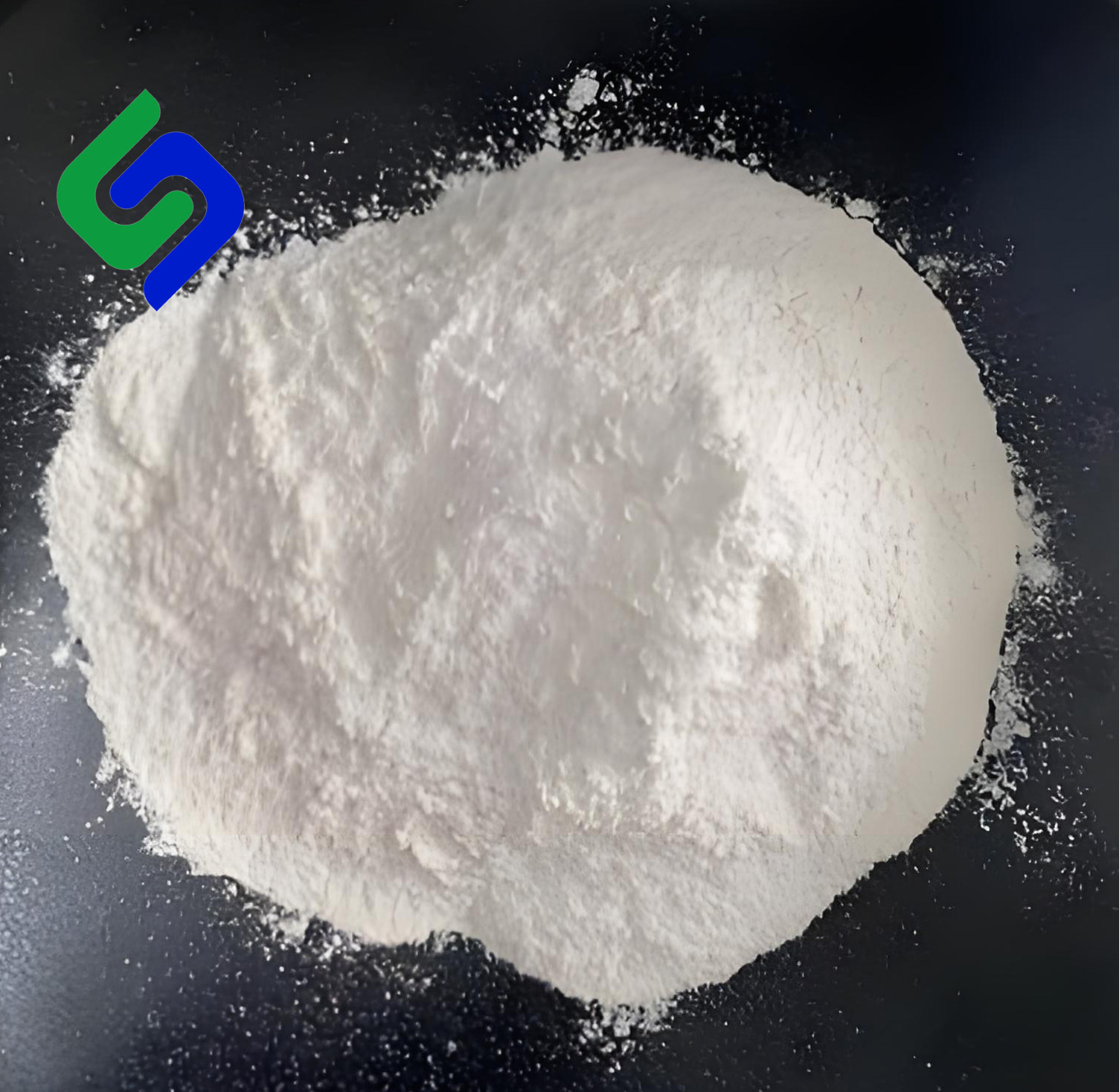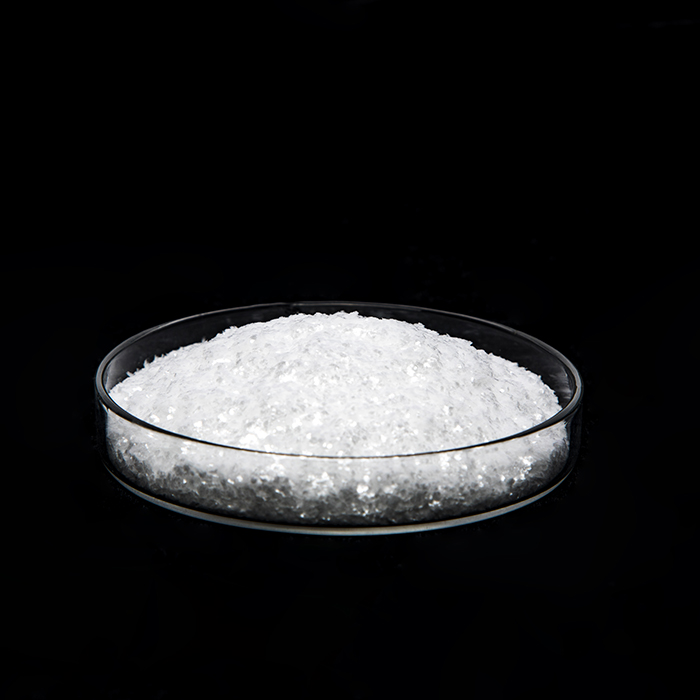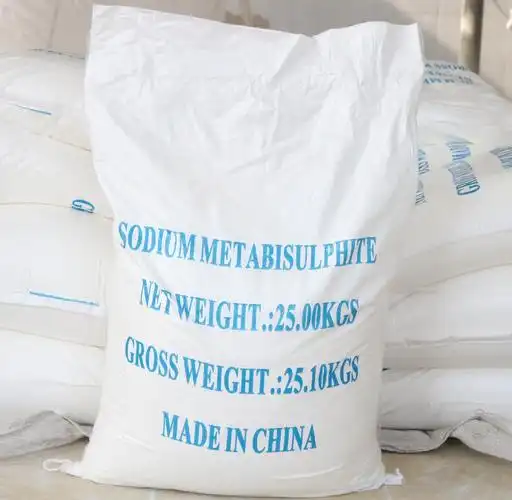

1. Functional Mechanism of sodium methallyl sulfonate (SMAS, CAS NO.:1561-92-8) in PCE Synthesis
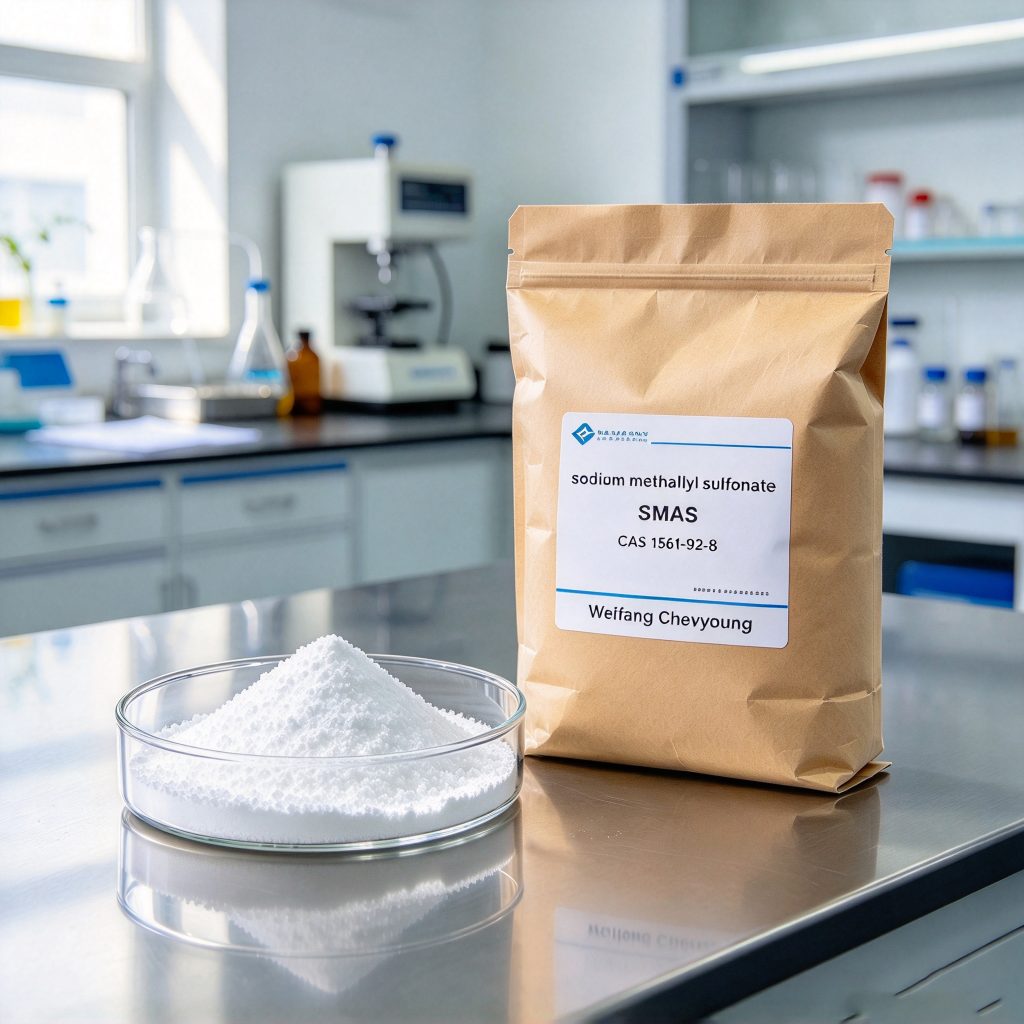
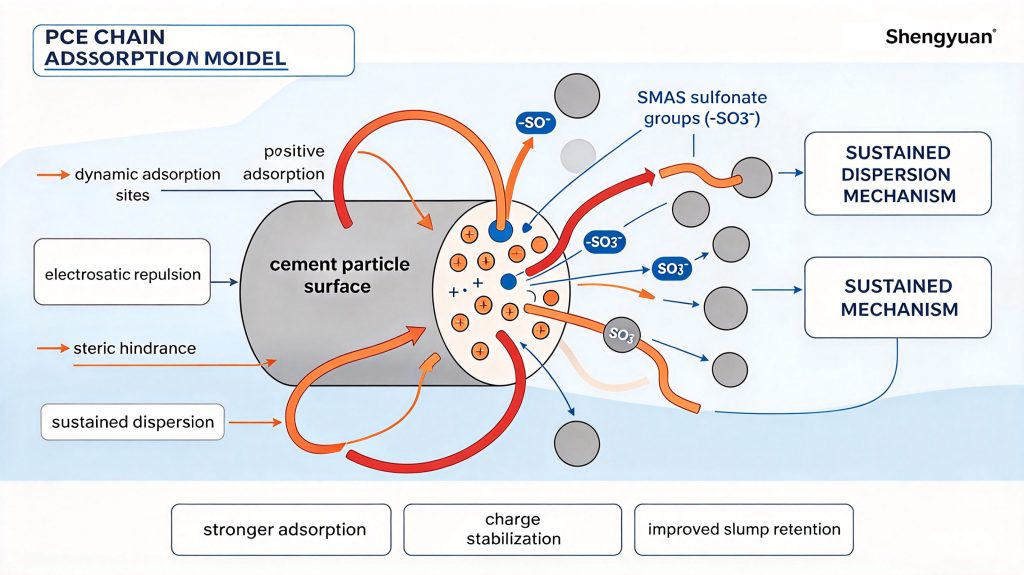
sodium methallyl sulfonate, abbreviated as SMAS, CAS NO.:1561-92-8, is a classic anionic sulfonate functional monomer widely copolymerized into polycarboxylate superplasticizer (PCE) molecular chains. Unlike main macromonomers that provide side chains for steric hindrance dispersion, SMAS carries strongly hydrophilic sulfonate groups (-SO₃⁻Na⁺). When SMAS is incorporated into the backbone of polycarboxylate superplasticizer, it introduces extra negative charge sites, improves monomer copolymerization reactivity, adjusts molecular weight distribution, and participates in the adsorption balance on cement particle surfaces.
In conventional PCE synthesis formulas, SMAS mainly serves three core roles: first, as a chain transfer agent to moderate polymer molecular weight and prevent excessive crosslinking or ultra-high molecular weight polymer formation; second, supplementing anionic adsorption groups to enhance initial adsorption on positively charged cement mineral surfaces such as C₃A; third, optimizing the hydrophilicity of the polymer backbone to tune adsorption kinetics, which directly relates to slump retention of concrete. The slump retention of polycarboxylate superplasticizer depends on a dynamic adsorption process: part of the polymer adsorbs rapidly for initial dispersion, while residual polymer in the pore solution adsorbs gradually over time to offset cement hydration consumption. SMAS dosage adjustment changes this dynamic balance, but the effect is not simply linear.
2. Why SMAS Dosage Reduction Does Not Always Cause Severe Loss of Slump Retention
A common misunderstanding in PCE laboratory development and mass production is that less SMAS monomer must greatly weaken slump retention performance of polycarboxylate superplasticizer. In fact, the degree of performance change is determined by the original SMAS proportion, matching monomer system, initiator system and target cement type.
When the original SMAS dosage in the formula is in the excess range, moderately cutting SMAS monomer will not bring a sharp drop in slump retention. Excessive SMAS introduces too many sulfonate groups, which makes PCE adsorb too fast at the early hydration stage. Fast over-adsorption depletes free PCE molecules in liquid phase quickly, and this situation even causes poor slump retention. Reasonable reduction of SMAS in this scenario slows down the initial adsorption rate, reserves more free polymer in aqueous phase, and can even improve slump retention for some cement.
SMAS is not the only monomer that can regulate adsorption rate and charge density of PCE. Other functional monomers including acrylic acid, maleic anhydride or slow-release carboxylate monomers can compensate part of the charge regulation function. Many modern slump-retaining type PCE formulas use low-SMAS or even SMAS-free systems, relying on slow-hydrolyzable ester monomers to achieve sustained-release adsorption and stable slump retention.
3. Scenarios Where SMAS Reduction Will Seriously Damage Slump Retention of Polycarboxylate Superplasticizer
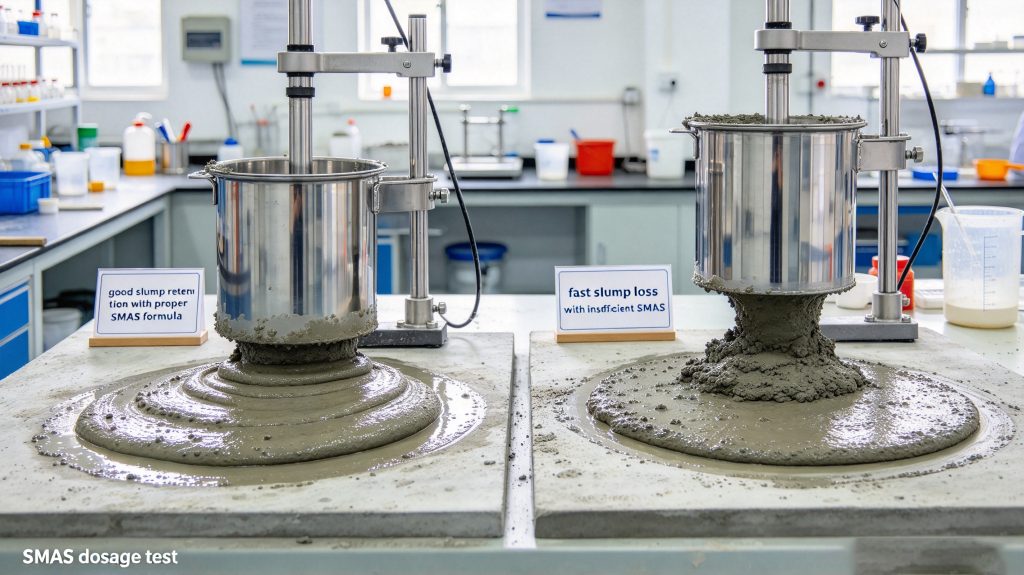
If the baseline SMAS dosage is already at the lower limit of the optimized window, further reducing SMAS monomer dosage will significantly deteriorate slump retention performance. In this case, the number of anionic anchor points on PCE molecular backbone becomes insufficient. The polymer adsorption capacity declines, and the polymer tends to form unstable adsorption layers on cement particles. As cement hydration proceeds and ettringite continuously forms, the adsorbed PCE is easily covered and buried by hydration products. There are not enough spare free PCE chains in solution to replenish adsorption sites, so concrete slump drops rapidly.
Another high-risk situation is PCE synthesized without other retention functional monomers. If the formula only depends on SMAS to adjust charge density and molecular weight distribution, sharp SMAS cut will lead to widened molecular weight distribution, higher proportion of ultra-high molecular weight polymers. These large molecules adsorb rapidly and are hard to achieve sustained dispersion, resulting in obvious slump loss. This adverse effect becomes more prominent under high temperature casting conditions or with fast-hydration cement rich in C₃A.
4. Side Effects of Excessively Lowering SMAS Monomer in PCE Polymerization
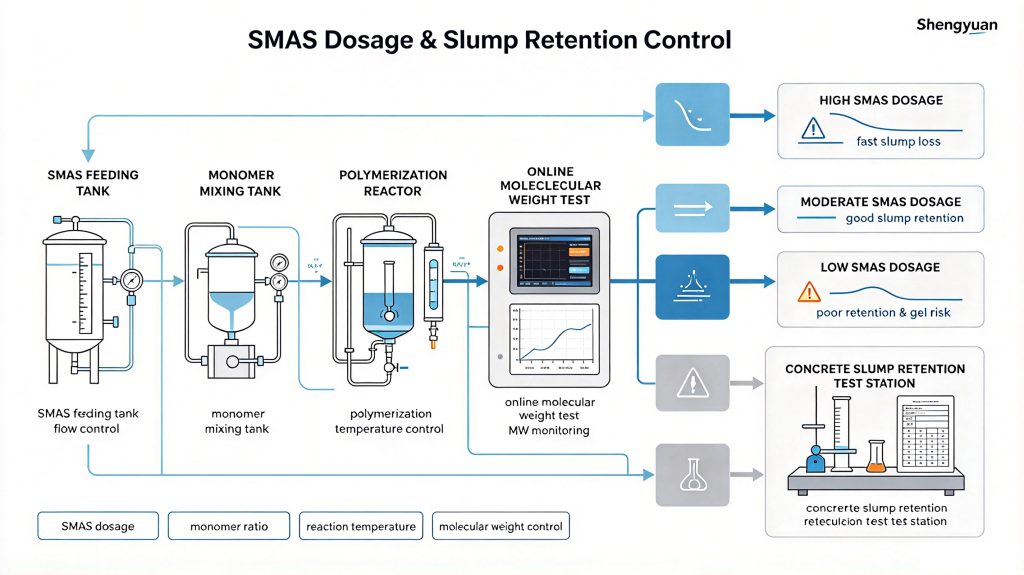
Beyond slump retention failure, drastic SMAS reduction also brings polymerization process risks. SMAS acts as an effective chain regulator in free-radical copolymerization of polycarboxylate superplasticizer. Without enough SMAS monomer, chain transfer efficiency drops, molecular weight rises out of control, and the viscosity of PCE mother liquor increases obviously. Severe cases lead to gelation in the reactor and batch scrap.
The charge density of the final PCE product decreases synchronously. Initial dispersion force may decline, and the required PCE addition dosage to reach target flowability rises. In manufactured sand concrete containing high mud content, low charge density PCE is more vulnerable to competitive adsorption by montmorillonite clay, slump loss becomes faster and the anti-clay performance worsens.
5. Adjustment Strategies for PCE Formula When Cutting Down SMAS Monomer
If production needs to reduce SMAS monomer dosage for cost optimization or other purposes, formula matching modification is necessary to preserve slump retention of polycarboxylate superplasticizer. First, replace part of SMAS function with slow-release ester functional monomers, which hydrolyze gradually in alkaline cement pore solution and continuously generate carboxylate adsorption groups for sustained dispersion. Second, adjust initiator feeding rate and chain transfer agent (such as mercaptopropionic acid) to keep target molecular weight when SMAS is reduced. Third, perform gradient SMAS dosage tests to find the lowest safe threshold instead of one-step large reduction.
After formula adjustment, concrete tests covering different cement batches, manufactured sand, temperature gradients must be carried out. Test indicators include initial slump, slump at 30 min, 60 min, air content and setting time to verify whether slump retention meets specification requirements.
6. Key Differentiation: SMAS Function vs Slow-Release Retention Mechanism of PCE
It is critical to distinguish two independent technical paths for slump retention of polycarboxylate superplasticizer. The SMAS adjustment path modifies backbone charge density and molecular weight distribution to change adsorption rate; the slow-release monomer path relies on alkaline hydrolysis to newly generate adsorption groups over time. SMAS assists retention by tuning adsorption balance, but it is not the fundamental source of slow-release retention. This explains why some low-SMAS PCE products can achieve excellent retention while some high-SMAS products still suffer fast slump loss.
FAQ
Q1: What is the common mass proportion range of SMAS in conventional PCE copolymerization formula?
A1: For ordinary water-reducing PCE, sodium methallyl sulfonate (SMAS, CAS NO.:1561-92-8) generally accounts for 1.5% ~ 5.0% of total monomer mass. Slump-retaining type PCE usually uses lower SMAS dosage, while high charge density PCE for mud-rich aggregate adopts higher SMAS addition.
Q2: Can I completely remove SMAS monomer from PCE formula to get qualified slump retention?
A2: Yes, it is feasible with proper formula redesign. Many commercial retention-type PCE are SMAS-free, using hydrolyzable ester monomers to provide delayed adsorption groups. But direct removal without modifying other monomers usually causes molecular weight runaway and poor slump retention.
Q3: When SMAS dosage is reduced, why does high C₃A cement show worse slump retention than ordinary cement?
A3: C₃A hydrates rapidly and consumes PCE adsorption sites in a short time. Lower SMAS reduces negative charge density, so less free polymer can supplement adsorption. Fast hydration covers polymer chains quickly and accelerates slump loss.
Q4: Is SMAS mainly a chain transfer agent or adsorption monomer in polycarboxylate superplasticizer?
A4: It has dual functions. Its sulfonate group provides anionic adsorption sites, and its allylic structure performs chain transfer to control polymer molecular weight. Both functions jointly affect dispersion and slump retention performance.
Q5: If I reduce SMAS, which raw material is most suitable to compensate slump retention?
A5: Hydrolyzable carboxylate ester monomers are the preferred matching material. They are stable in neutral PCE mother liquor and slowly hydrolyze in cement alkaline environment to continuously release carboxylate groups for sustained dispersion.
Q6: How to judge whether slump loss comes from insufficient SMAS or poor slow-release monomer design?
A6: Run parallel tests: one test uses purified PCE mother liquor to test cement paste adsorption curve. If adsorption is too weak and total charge is low, insufficient SMAS is the main factor. If initial adsorption is strong but no new adsorption groups are generated over time, the slow-release monomer design needs optimization.
References
[1] Plank J, Sachsenhauser B. Mechanism of slump retention of polycarboxylate superplasticizers in cement paste. Cement and Concrete Research, 2006, 36(6): 1052–1060. [2] Wang Z, Zhang Y. Influence of sodium methallyl sulfonate (SMAS) dosage on molecular structure and performance of polycarboxylate superplasticizer. Journal of Building Materials, 2019, 22(4): 521–526. [3] Liu M. Effect of sulfonate functional monomers on adsorption kinetics and dispersion retention of PCE superplasticizer. Concrete Admixture, 2022, (03): 12–17. [4] Lei L, Plank J. A study on the impact of molecular structure on the slump retention behavior of polycarboxylate superplasticizers. Journal of Applied Polymer Science, 2014, 131(12).