
Functional Comonomer for Drilling Fluid Fluid Loss Agent
Oilfield drilling operations in deep, high-salinity reservoirs face severe challenges: high temperature high pressure (HTHP), calcium and magnesium ion contamination, and borehole instability. Conventional polymers often degrade rapidly under these harsh downhole conditions, leading to poor filtrate control, damaged filter cake and increased operational risks. To solve this problem, chemical formulators rely on high-performance functional comonomers, among which Sodium Methallyl Sulfonate (SMAS / MAS, CAS 1561-92-8) stands out as a preferred sulfonate comonomer for drilling fluid fluid loss agent synthesis.
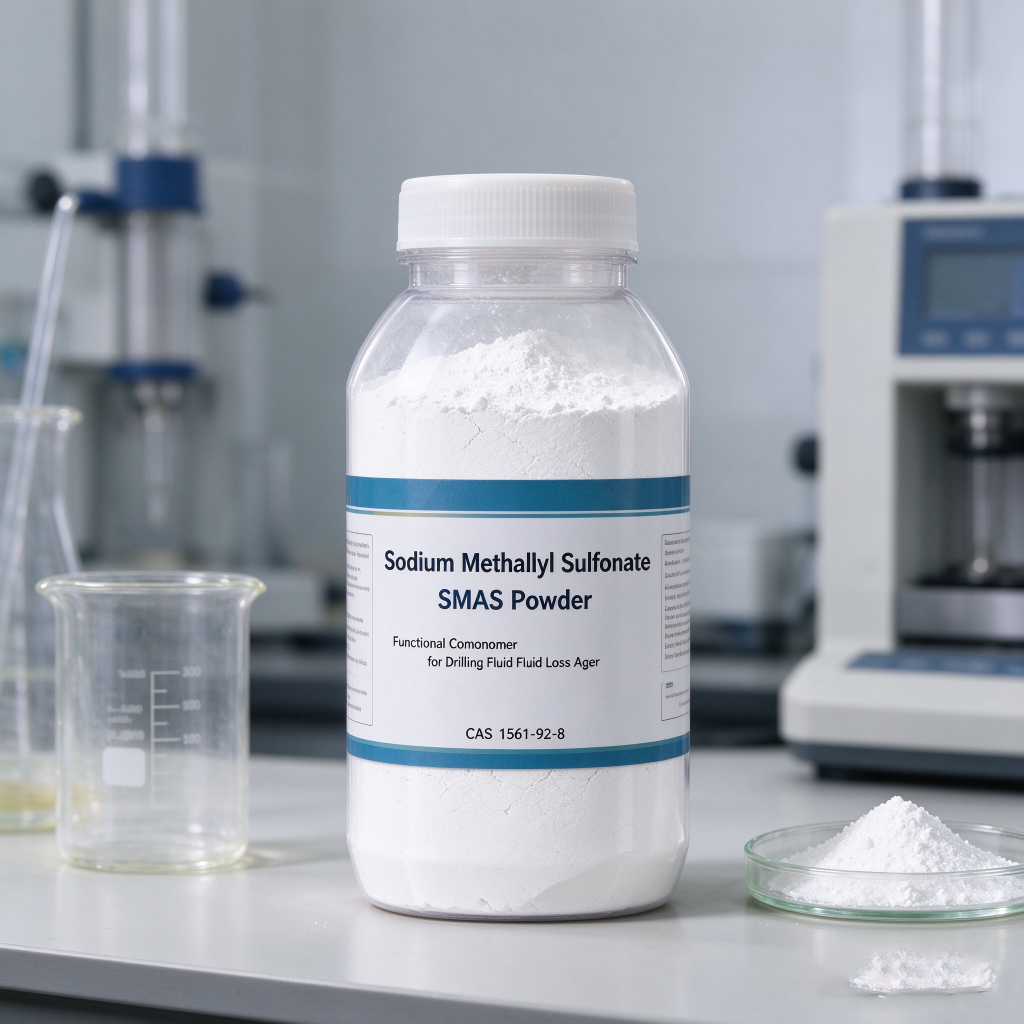
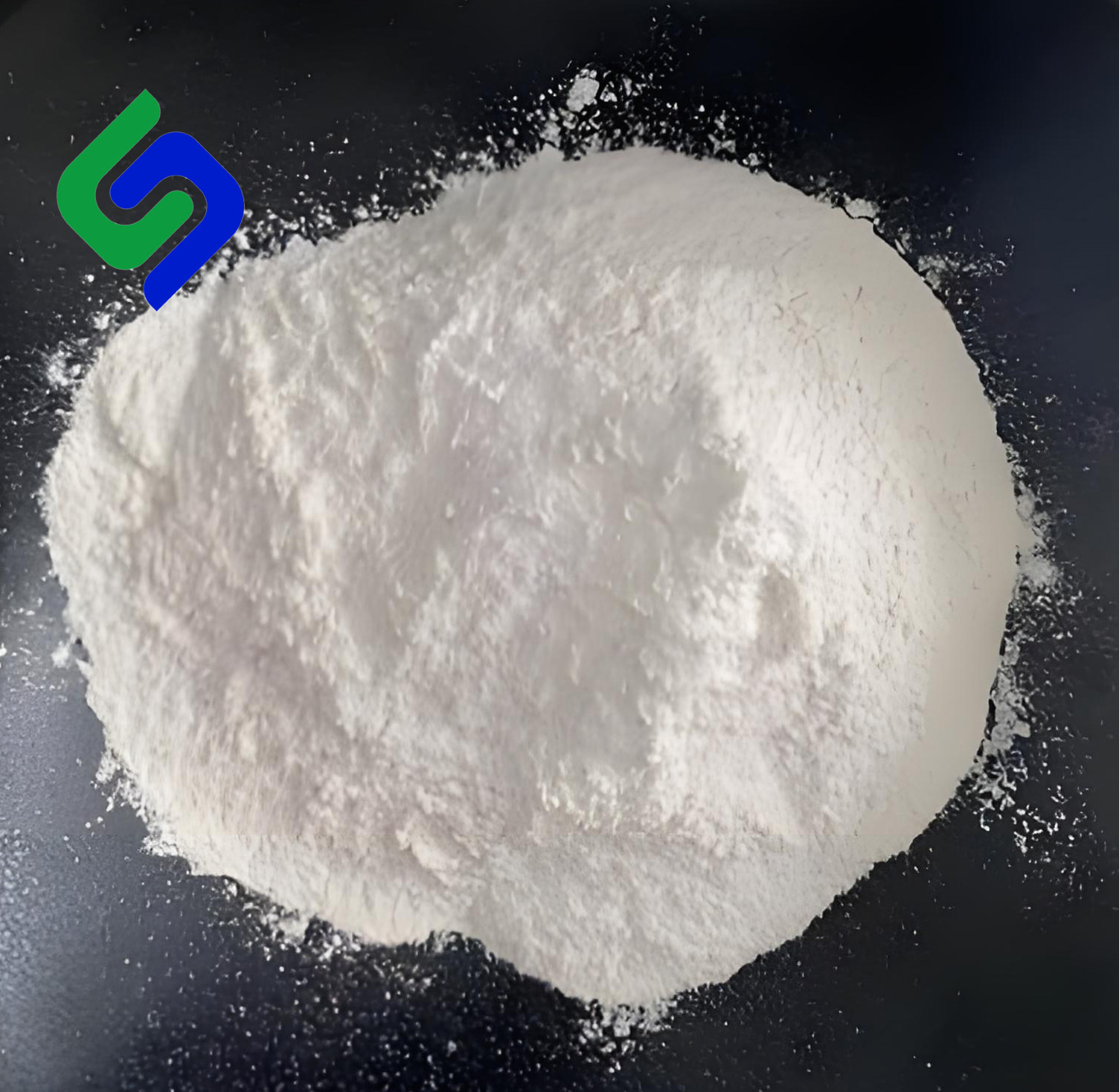
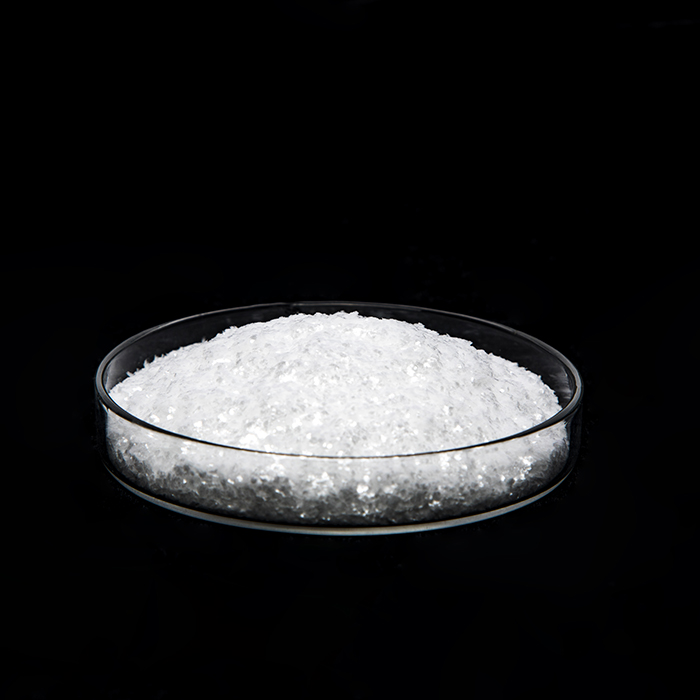
SMAS is not a ready-to-use drilling mud additive. Instead, it is a reactive anionic functional comonomer. It carries a polymerizable carbon-carbon double bond and hydrophilic sulfonate side groups. When copolymerized with acrylamide, acrylic acid and other monomers, SMAS incorporates sulfonate groups into the backbone of the final polymer. This molecular structure gives the finished fluid loss reducer excellent electrolyte tolerance and thermal stability.
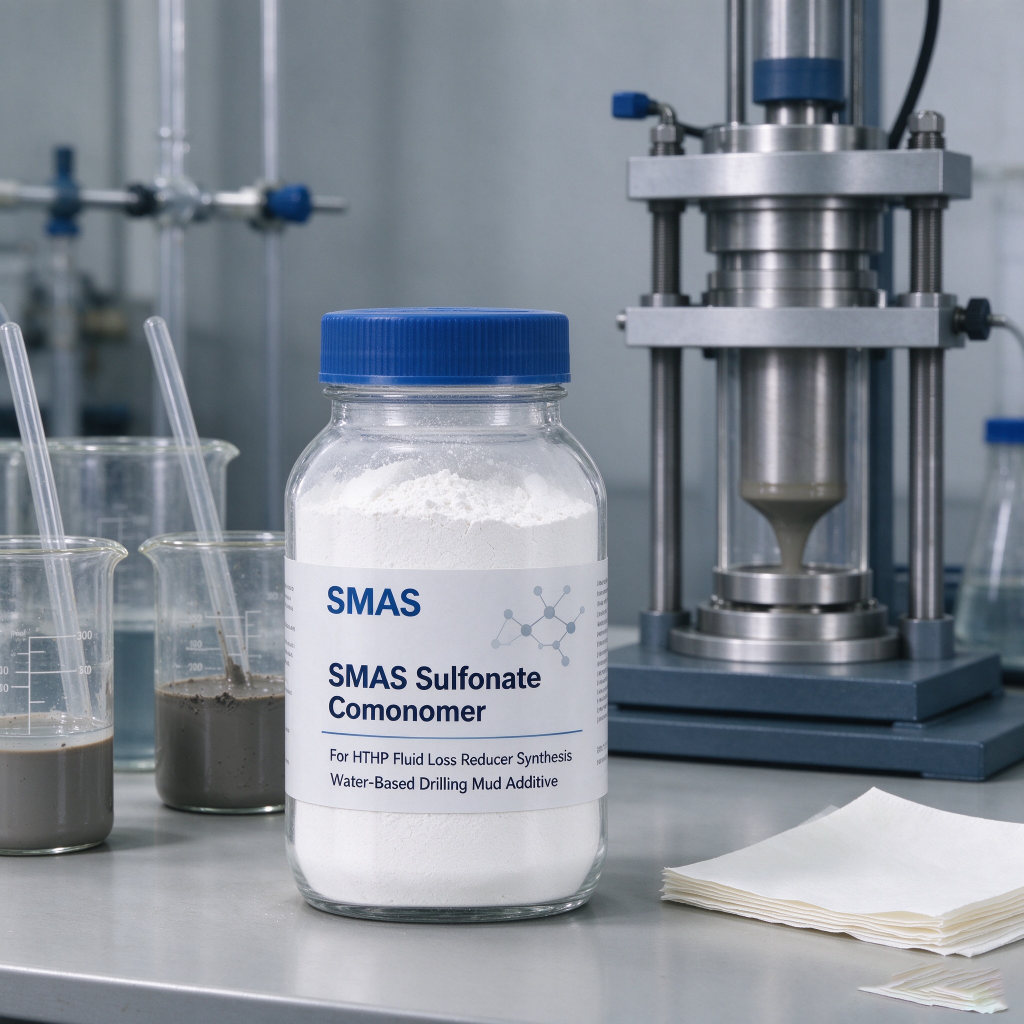
In water-based drilling fluid systems, the polymer made from SMAS comonomer can effectively control filtrate invasion into the formation. It helps build thin, compact and low-permeability filter cake on the borehole wall, preventing reservoir damage and maintaining wellbore stability. Compared with ordinary polymers, SMAS-modified fluid loss agents maintain stable rheology even in high salinity brine, and resist interference from calcium and magnesium ions in hard formation water. This makes SMAS suitable for deep well, ultra-deep well and high-salt reservoir water-based mud formulations.
Key Benefits of SMAS as Comonomer for Drilling Fluid Fluid Loss Agent
- Functional sulfonate comonomer dedicated to synthesize drilling fluid fluid loss reducer
- Significantly improves high-temperature and salt resistance of finished fluid loss polymer
- Strong anti-calcium and anti-magnesium performance in complex formation brine
- Good copolymerization reactivity with acrylamide and acrylic acid monomers
- Water-soluble monomer, easy to handle in aqueous solution polymerization process
- Stabilizes polymer molecular chain under HTHP downhole environments
Typical Application Scenarios
- Raw comonomer for anionic fluid loss agent in water-based drilling fluid
- Polymer formulation for deep wells and high salinity reservoir drilling mud
- Production of HTHP resistant drilling fluid additives
- Secondary application: comonomer for EOR oil displacement polymer and oilfield water treatment polymers
SMAS vs AMPS – Which Sulfonate Monomer to Choose for Drilling Fluid Polymer?
Both SMAS and AMPS are widely used sulfonate functional monomers for oilfield polymer production, but they have obvious differences in molecular structure and application performance.
AMPS has a bulkier side group, providing stronger thermal stability for ultra-high temperature reservoirs, but it comes with higher raw material cost. SMAS offers balanced salt resistance and copolymer reactivity with a more competitive price. For most medium-to-deep wells with high salinity and moderate bottom-hole temperature, SMAS is a cost-effective choice for manufacturing fluid loss control agents. Formulators often combine SMAS with AMPS in copolymer recipes to balance performance and production cost.
Note: SMAS (Sodium Methallyl Sulfonate) should not be confused with SAS (Sodium Allyl Sulfonate). SAS has simpler molecular structure and weaker anti-electrolyte performance, and is rarely used for high-performance HTHP fluid loss agent.
FAQ
Q: What is SMAS used for in drilling fluid?
A: SMAS (sodium methallyl sulfonate) is a copolymer monomer rather than finished drilling mud additive. It copolymerizes with acrylamide monomers to produce high temperature salt-resistant fluid loss control agents for water-based drilling fluids.
Q: How does SMAS improve fluid loss performance of drilling mud polymer?
A: SMAS contains reactive double bond and sulfonate functional group. During copolymerization, sulfonate groups are grafted onto polymer molecular chains. These charged groups resist ion shielding and thermal degradation, so the finished fluid loss agent can maintain filtrate control ability under high salt and high temperature downhole conditions.
Q: Can SMAS be used for EOR polymer besides drilling fluid?
A: Yes. Besides drilling fluid fluid loss agent, SMAS is also applied as functional comonomer for enhanced oil recovery polymer, oil displacement agent and oilfield wastewater treatment flocculant.
Conclusion
For oilfield polymer manufacturers and drilling fluid formulators looking for cost-effective sulfonate comonomers, SMAS is a reliable option for producing high-performance fluid loss agents. Its unique molecular structure delivers stable HTHP and anti-salt properties for water-based mud in challenging reservoirs. When designing copolymer formulations for drilling fluid additives, you can evaluate SMAS alone or blend it with other monomers such as AMPS to meet specific downhole performance requirements.