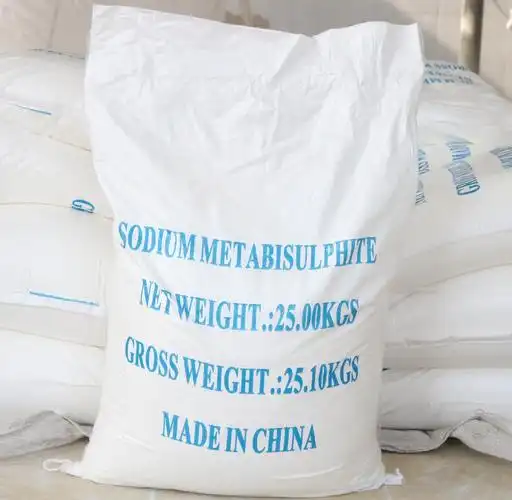

Sodium methallyl sulfonate (SMAS, CAS 1561-92-8) is a key functional monomer widely used to synthesize polycarboxylate superplasticizer. SMAS-modified superplasticizer delivers excellent dispersion performance at normal temperatures, yet it reveals multiple obvious drawbacks when applied in low-temperature winter construction environments. Understanding these weaknesses helps concrete engineers adjust mix formulas and avoid on-site construction quality accidents.
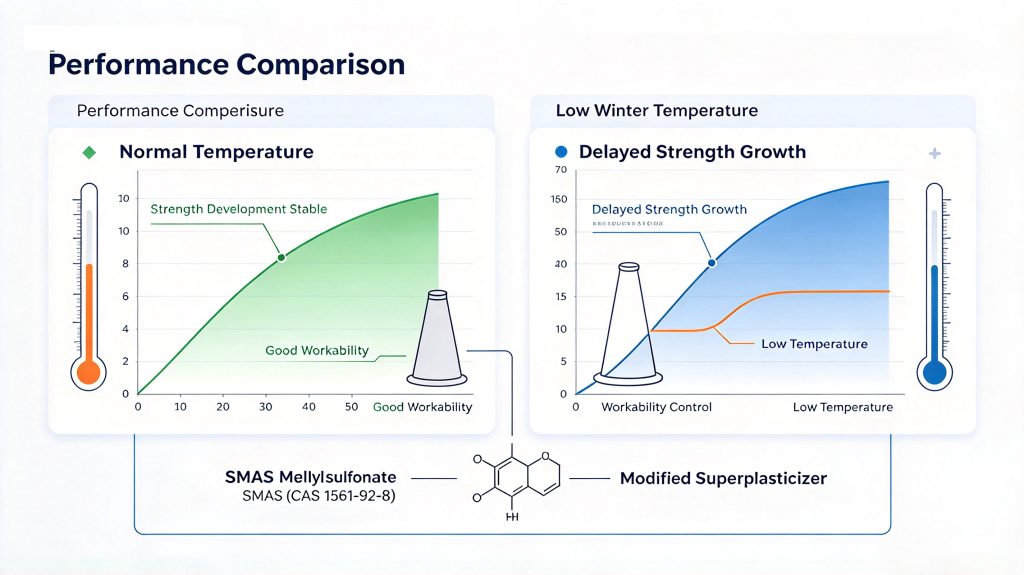
SMAS-modified superplasticizer slows early hydration strength gain in cold winter
SMAS (CAS 1561-92-8) introduces sulfonic acid groups into the molecular chain of polycarboxylate superplasticizer. At low ambient temperature in winter, the adsorption rate of SMAS-modified superplasticizer on cement particle surface decreases. Cement hydration reaction is suppressed significantly. The concrete mixed with SMAS-modified superplasticizer develops early strength much slower. It extends formwork removal time, slows construction progress and increases the risk of frost damage for fresh concrete.
Slump retention performance of SMAS-modified superplasticizer deteriorates under low temperature
Sodium methallyl sulfonate modified superplasticizer has stable slump retention at 20~25℃. In winter low-temperature conditions, the molecular activity of SMAS-modified superplasticizer changes unexpectedly. The slow continuous adsorption behavior of SMAS units cannot work as designed. Sometimes the concrete shows sudden slump loss or abnormal slump growth over time. Unstable workability brings troubles for pumping and pouring in winter construction.
SMAS-modified superplasticizer is sensitive to cement mineral variation in cold environment
The dispersion effect of SMAS-modified superplasticizer relies heavily on the matching degree between sodium methallyl sulfonate structured polymer and cement components. Under low winter temperature, the solubility of cement minerals alters. SMAS-modified superplasticizer becomes more sensitive to cement C3A content, gypsum type and clay impurities. Small batch fluctuation of cement raw materials easily causes poor concrete fluidity and inconsistent on-site performance.
Increased risk of delayed setting for concrete with SMAS-modified superplasticizer in winter
The sulfonate groups from SMAS (CAS 1561-92-8) will produce certain retarding effect. When temperature drops below 5℃ in winter construction, this retarding effect is amplified. Concrete mixed with SMAS-modified superplasticizer suffers prolonged setting time. If thermal preservation measures are insufficient, fresh concrete stays in plastic state for too long and faces higher frost cracking risk.
SMAS-modified superplasticizer may raise viscosity of low-temperature fresh concrete
Under cold winter conditions, the viscosity of pore solution inside concrete rises. The polymer backbone introduced by sodium methallyl sulfonate makes fresh concrete viscosity higher than expected. Even if slump value meets design requirement, the concrete is sticky and hard to pump. Pumping pressure increases, blockage risk rises and construction operation efficiency reduces.
Storage risk of SMAS-modified superplasticizer mother liquor in winter low temperature
SMAS-modified polycarboxylate mother liquor synthesized from SMAS (CAS 1561-92-8) may have crystallization risk during outdoor winter storage. Low temperature can trigger partial precipitation of polymer molecules. Once precipitation happens, the dispersion ability of SMAS-modified superplasticizer drops permanently if not fully re-mixed, leading to on-site concrete quality fluctuation.