1. Introduction: Polymerization Temperature as a Structural Tuning Knob for Sodium Methallyl Sulfonate Copolymers
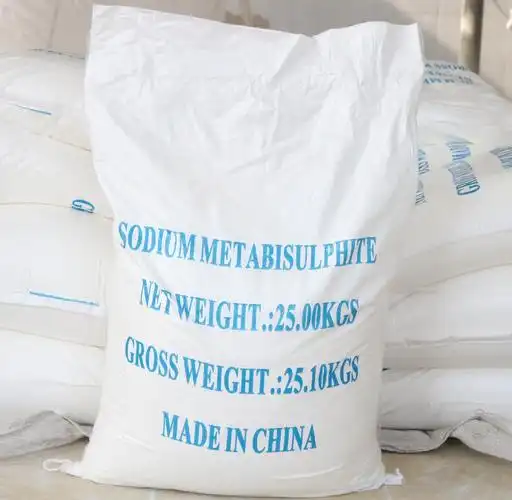
Sodium methallyl sulfonate, widely known as SMAS, CAS NO.:1561-92-8, is a core sulfonated functional monomer for synthesizing phosphorus-free polycarboxylate scale inhibitors used in industrial circulating cooling water, reverse osmosis systems and thermal desalination. When copolymerized with acrylic acid (AA), maleic anhydride or other carboxyl monomers, SMAS introduces negatively charged –SO₃⁻Na⁺ groups into the polymer backbone, improving salt tolerance, thermal stability and iron oxide dispersion capacity of the final antiscalant product.
Among all process parameters in aqueous free-radical polymerization, reaction temperature exerts the most profound and complex influence on the molecular structure of SMAS-based copolymers. It directly controls initiator decomposition rate, chain-growth kinetics, chain-transfer intensity of sodium methallyl sulfonate, monomer conversion and copolymer composition uniformity. All these structural variables ultimately determine the scale inhibition efficiency, threshold effect and application performance of the finished product. Understanding the temperature–structure–performance relationship is essential for producing high-efficiency, stable and cost-effective SMAS scale inhibitors.
2. How Polymerization Temperature Modulates Sodium Methallyl Sulfonate (SMAS) Chain Transfer and Copolymer Molecular Weight
The most fundamental mechanism linking temperature to scale inhibition performance is the chain-transfer behavior of sodium methallyl sulfonate. Unlike conventional acrylic sulfonate monomers such as AMPS, SMAS carries an active allylic C–H bond on its side chain, which makes it act simultaneously as a functional monomer and an implicit chain transfer agent during polymerization.
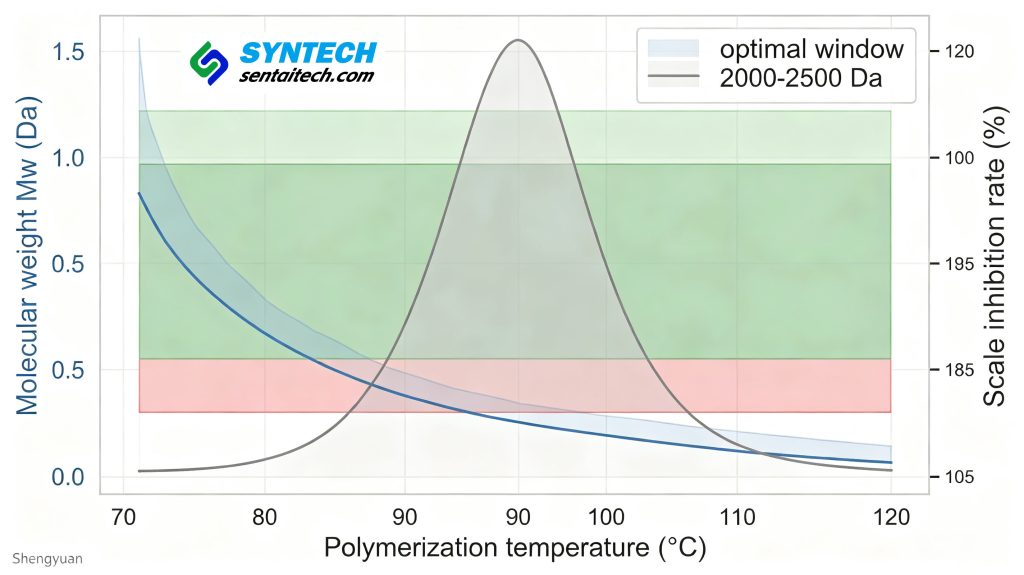
- At low polymerization temperature (<80 °C): The initiator (typically persulfate) decomposes slowly, and the chain-transfer constant of SMAS remains low. Polymer chains grow longer, resulting in high weight-average molecular weight (Mw) and often a bimodal distribution with a significant high-molecular-weight shoulder.
- In the moderate temperature range (85–105 °C): Initiator decomposition proceeds at a stable rate, and SMAS exerts moderate chain transfer. The resulting polymer molecular weight falls into the 2000–2500 Da window, which is widely recognized as the optimal range for scale inhibition, as confirmed by EPRI industry guidelines and peer-reviewed water-treatment polymer studies.
- At elevated temperature (>110 °C): Both initiator decomposition and SMAS chain transfer accelerate sharply. The average molecular weight drops significantly, and the proportion of low-molecular-weight oligomers increases. Published copolymerization research on SMAS-modified polymers verifies an inverse relationship between SMAS chain-transfer intensity and final molecular weight, and this effect is amplified at higher reaction temperatures.
Because scale inhibition relies on a precise threshold effect — polymer chains must be long enough to adsorb and distort crystal lattices but short enough to avoid bridging flocculation — temperature-driven molecular weight shift directly moves the product toward or away from the performance optimum.
3. Influence of Polymerization Temperature on SMAS Monomer Conversion and Copolymer Composition Uniformity
Beyond molecular weight, polymerization temperature also determines how evenly sodium methallyl sulfonate units are incorporated into the copolymer backbone, which in turn affects charge distribution and scale-inhibition consistency.
At insufficiently low temperatures, the reactivity gap between acrylic acid and SMAS widens. Fast-reacting acrylic acid polymerizes first, forming long polyacrylate segments, while SMAS remains largely unreacted in the liquid phase. The final product is a mixture of AA-rich high-molecular-weight chains, SMAS-rich oligomers and residual free SMAS monomer. This compositional inhomogeneity leads to erratic scale inhibition performance: high-MW fractions cause flocculation, while low-MW fractions contribute little to lattice distortion.
At excessively high temperatures, overall monomer conversion rises, but side reactions such as SMAS homopolymerization and premature chain termination increase. The polydispersity index (PDI) widens, and a large fraction of very short oligomers cannot provide effective threshold inhibition. Moreover, residual unreacted sodium methallyl sulfonate increases the COD of the finished product and reduces biodegradability, which runs counter to green water treatment requirements.
The optimal temperature window produces the narrowest PDI and the most uniform distribution of carboxyl and sulfonate groups along the polymer chain, giving the most consistent and reliable scale inhibition across different water quality conditions.
4. Correlation Between Polymerization Temperature and Scale Inhibition Efficiency of SMAS-Based Copolymers
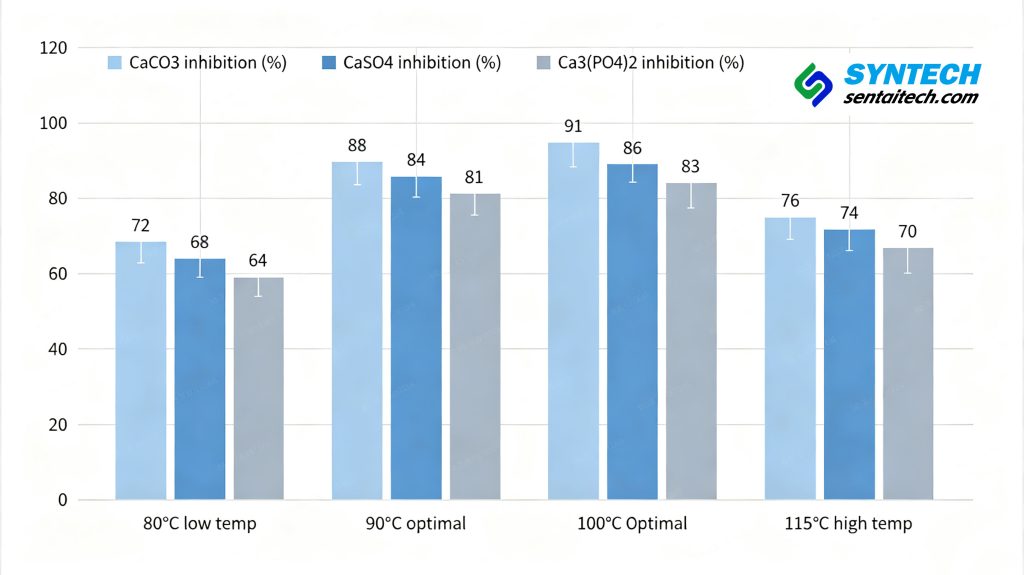
When tested against typical scale-forming ions, SMAS-based scale inhibitors show a clear bell-shaped performance curve with increasing polymerization temperature.
4.1 Under-low temperature: oversized molecular weight and reduced inhibition efficiency
When polymerization runs below 80 °C, the average molecular weight often exceeds 4000–6000 Da. Oversized polymer chains tend to bridge multiple calcium carbonate or calcium sulfate crystals, causing flocculation instead of dispersion. Instead of inhibiting scale deposition, the polymer can actually accelerate sediment formation and increase fouling on heat exchanger surfaces. The threshold effect is also weakened, meaning higher dosage is required to achieve the same inhibition rate, raising operating cost for end users.
4.2 Optimal temperature window: peak scale inhibition performance
For most SMAS–acrylic acid copolymer scale inhibitors, the highest efficiency occurs at a polymerization temperature of 90–100 °C under atmospheric reflux. At this temperature, the copolymer molecular weight concentrates in the 2000–2500 Da range, with narrow distribution and evenly distributed sulfonate and carboxyl groups.
- Calcium carbonate inhibition rate can reach 90%+ at typical dosage levels.
- Calcium sulfate inhibition remains stable even at high calcium and sulfate concentrations.
- Iron oxide dispersion capacity is balanced, preventing soft deposit formation. This performance peak aligns with the general industry consensus that 2000–3000 Da is the optimal molecular weight range for polycarboxylate scale inhibitorsACS Public….
4.3 Over-high temperature: depressed threshold effect and efficiency decline
When polymerization temperature exceeds 110–120 °C, strong SMAS chain transfer cuts average molecular weight below 1500 Da. Short oligomers adsorb on crystal surfaces but cannot provide sufficient steric hindrance or electrostatic repulsion to distort crystal growth effectively. The scale inhibition rate drops noticeably, especially for calcium phosphate and silicate scales that are more sensitive to polymer molecular weight. In addition, excessive temperature can cause partial desulfonation and oxidative degradation of sodium methallyl sulfonate units, further reducing effective sulfonate content and salt tolerance of the product.
5. Temperature Sensitivity Variation Across Different Scale Types for SMAS Copolymers
The impact of polymerization temperature is not identical for all scale types, due to different inhibition mechanisms:
- Calcium carbonate scale: Most sensitive to molecular weight. The 2000–2500 Da optimum is sharp; deviation in either direction causes obvious efficiency loss.
- Calcium sulfate / barium sulfate scale: Relies more on sulfonate groups for calcium tolerance. Performance is slightly less sensitive to temperature, but still peaks within the optimal molecular weight window.
- Calcium phosphate scale: Requires balanced charge density and molecular chain length. Too high temperature and the resulting low molecular weight significantly weaken dispersion and inhibition ability.
- Iron oxide dispersion: Improves moderately with higher temperature and shorter chains, but only within a narrow range; excessive oligomerization eliminates dispersion effect.
This means the optimal polymerization temperature should be fine-tuned according to the target scale type of the SMAS inhibitor product.
6. Industrial Optimization Strategies of Polymerization Temperature for SMAS Scale Inhibitor Production
To maximize scale inhibition efficiency while maintaining production stability, industrial plants typically adopt the following temperature-control strategies:
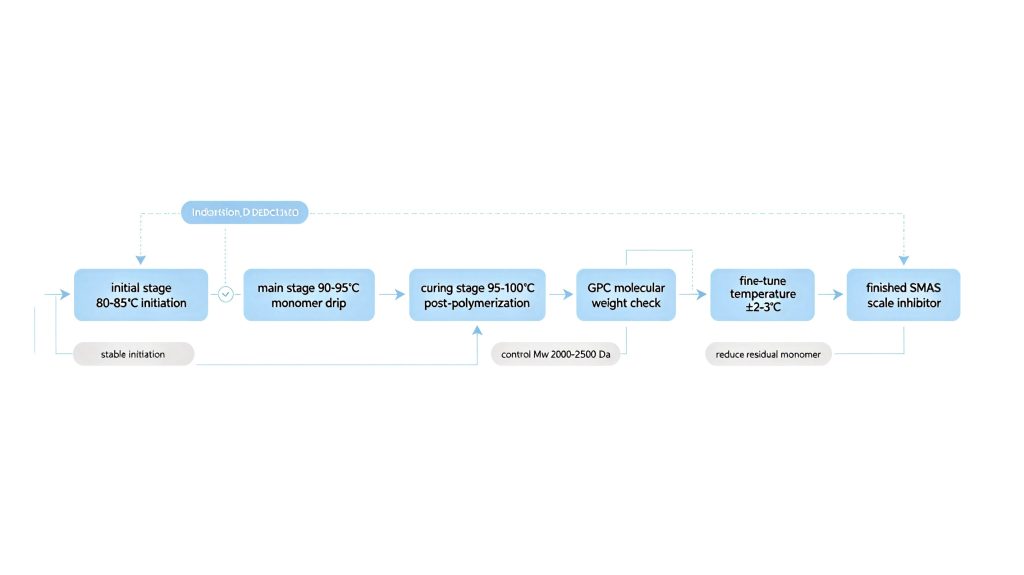
- Staged temperature program: Start at a slightly lower temperature (80–85 °C) to initiate polymerization stably, then raise to 90–95 °C during the main monomer drip period to control molecular weight, and finally hold at 95–100 °C for post-curing to reduce residual monomer.
- Initiator–temperature matching: Use redox initiation systems for low-temperature polymerization when tighter molecular weight control is required; use single persulfate initiator for conventional products under reflux temperature.
- Closed-loop adjustment with SMAS dosage: When SMAS feeding ratio is high, lower polymerization temperature moderately to avoid excessive chain transfer and ultra-low molecular weight. When SMAS ratio is low, raise temperature slightly to prevent over-high molecular weight.
- Online GPC monitoring: Periodically verify molecular weight during production campaigns, and fine-tune temperature ±2–3 °C to keep Mw within the target 2000–2500 Da window.
Frequently Asked Questions (FAQ)
Q1: What is the optimal polymerization temperature range for sodium methallyl sulfonate (SMAS, CAS NO.:1561-92-8) scale inhibitor copolymers?
A1: For conventional aqueous free-radical copolymerization of SMAS and acrylic acid, the optimal polymerization temperature is typically 90–100 °C under atmospheric reflux. This produces copolymers with molecular weight concentrated in the 2000–2500 Da range, which delivers the highest scale inhibition efficiency and threshold effect.
Q2: Why does too high polymerization temperature reduce SMAS-based scale inhibitor efficiency?
A2: High temperature intensifies the chain-transfer effect of sodium methallyl sulfonate, sharply reducing average molecular weight. Oligomers below ~1500 Da cannot provide sufficient lattice distortion and steric hindrance to inhibit crystal growth. Excessive temperature can also cause partial desulfonation of SMAS units, further weakening salt tolerance and scale inhibition performance.
Q3: What happens if polymerization temperature is too low for SMAS-acrylic acid scale inhibitors?
A3: Too low temperature slows initiator decomposition and reduces SMAS chain transfer, producing oversized polymer chains (Mw > 4000 Da). High-molecular-weight fractions cause inter-particle bridging and flocculation instead of dispersion, which can accelerate scale deposition instead of inhibiting it, and increase fouling on heat transfer surfaces.
Q4: Does polymerization temperature affect calcium sulfate and calcium carbonate inhibition differently for SMAS copolymers?
A4: Yes. Calcium carbonate inhibition is most sensitive to molecular weight and has the sharpest optimum temperature window. Calcium sulfate inhibition relies more on sulfonate group content, so it is slightly less temperature-sensitive, but still peaks in the 90–100 °C optimal range.
Q5: How does SMAS chain transfer behavior change with polymerization temperature?
A5: The allylic C–H bond in sodium methallyl sulfonate gives it inherent chain-transfer activity. As polymerization temperature rises, the chain-transfer constant of SMAS increases significantly, leading to shorter polymer chains and lower average molecular weight. This temperature dependence is the core reason why reaction temperature is such a powerful tuning knob for SMAS-based products.
Q6: Can we adjust SMAS dosage to compensate for improper polymerization temperature?
A6: Only partially. Adjusting SMAS dosage can shift molecular weight in the same direction as temperature change, but it cannot fix compositional inhomogeneity or high residual monomer caused by incorrect temperature. The best practice is to control temperature within the optimal window and adjust SMAS ratio only for fine-tuning of charge density and salt tolerance.
References
[1] Global Formulation. Scale Inhibitor Water Treatment: Phosphonates vs Polymers — EPRI molecular weight guidelines, 2000 Da optimal for scale inhibition [EB/OL]. https://www.globalformulation.com/scale-inhibitors-phosphonates-polyacrylates-threshold/
[2] Li Y, Wang J, Zhang L. Synthesis and Application of a Phosphorous-Free and Non-Nitrogen Polymer as an Environmentally Friendly Scale Inhibition and Dispersion Agent [J]. ACS Omega, 2020, 5(25): 15487–15495. (Optimal Mw 2000–3000 Da for scale inhibition.)
[3] Xiong Y, et al. Effect of sodium methylacrysulfonate upon the molecular weight and performance of polycarboxylate superplasticizer [J]. Journal of Functional Polymers, 2014. (SMAS chain transfer effect and inverse relationship between SMAS dosage and polymer molecular weight.)
[4] Alhamzah A A, Fellows C M, Hamed O A. Methallylsulfonate Polymeric Antiscalants for Application in Thermal Desalination Processes [J]. Polymers, 2023. (Molecular weight more critical than sulfonation degree for calcium sulfate inhibition.)
[5] Euro Chemical Supplies. Antiscalants & Scale Inhibitors: Polycarboxylate antiscalants, 2000–6000 Da for threshold inhibition [EB/OL]. https://eurochemsupplies.com/blog/antiscalants-and-scale-inhibitors/
[6] Industrial Chemical Datasheet. Sodium Methallyl Sulfonate (SMAS, CAS NO.:1561-92-8) for Water Treatment Scale Inhibitors [EB/OL]. Made-in-China Chemical Directory, 2024.