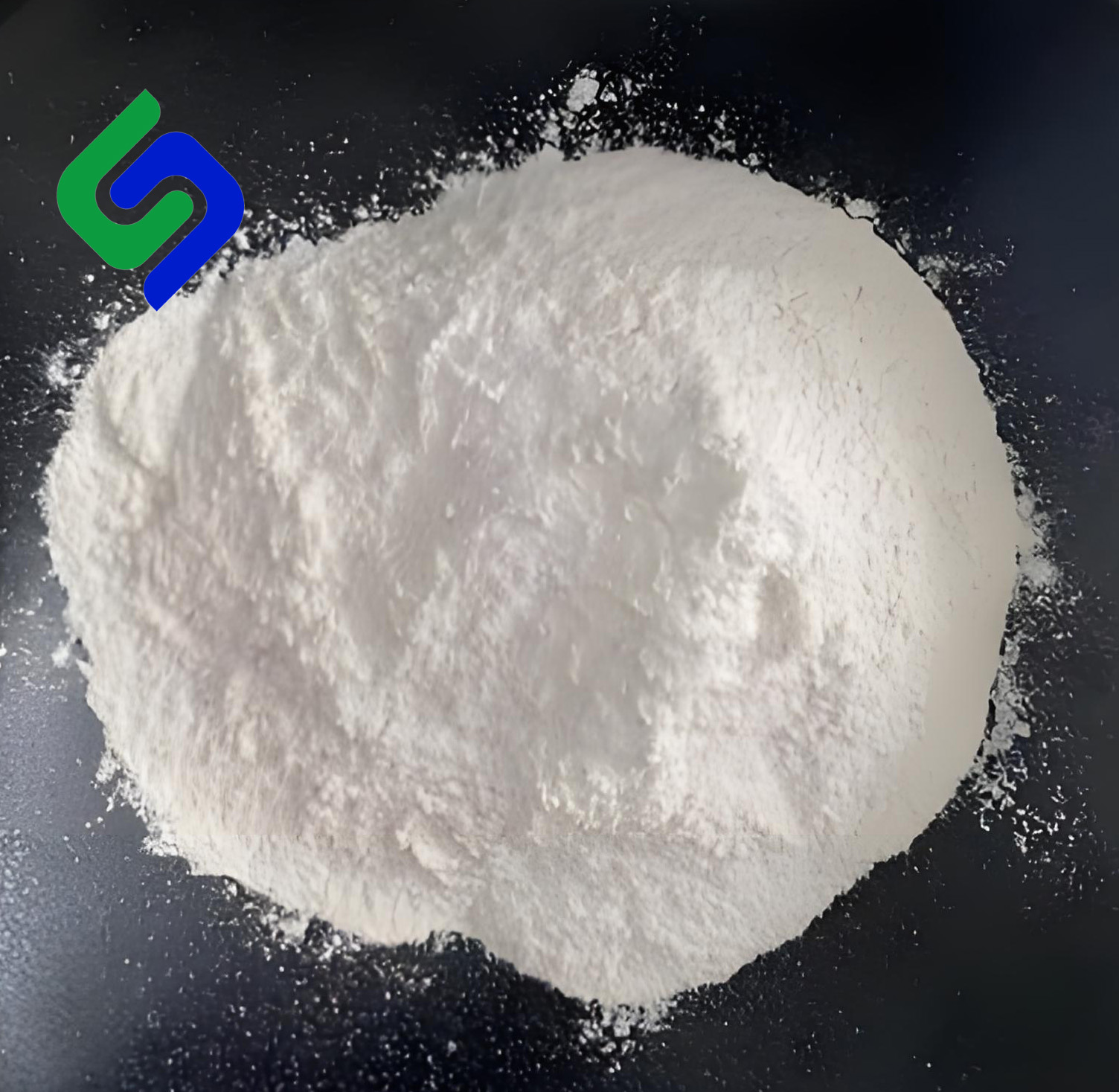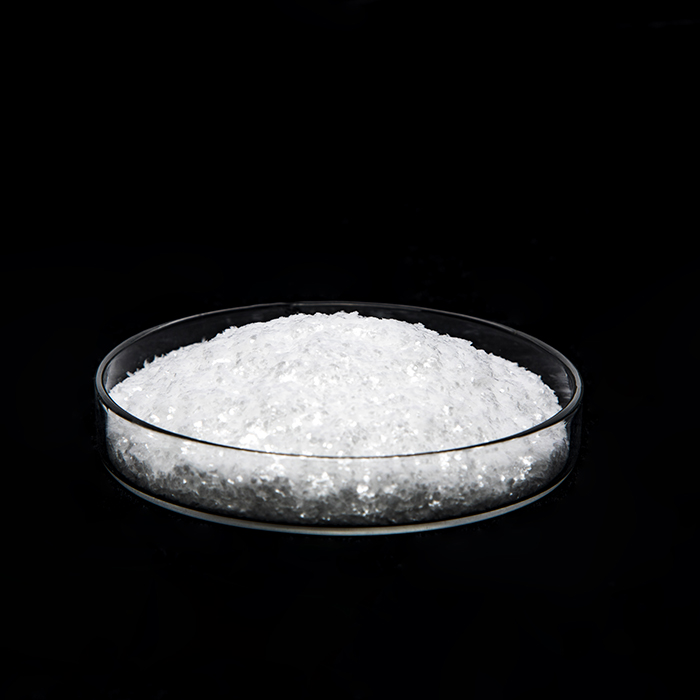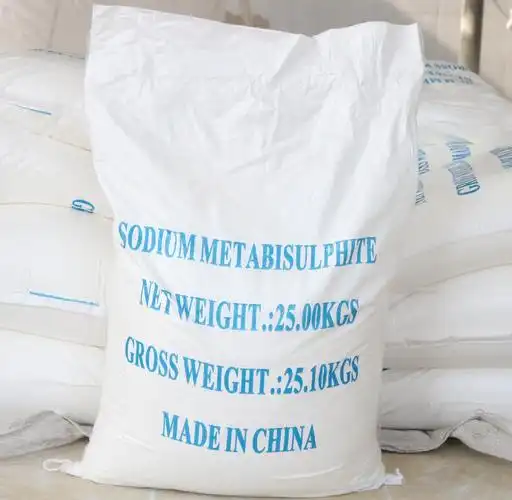

Sodium Methallyl Sulfonate, abbreviated as SMAS, is a bifunctional sulfonated monomer that controls polymer molecular weight and grafts negative sulfonate groups onto polycarboxylate ether (PCE) superplasticizer chains. High-purity Sodium Methallyl Sulfonate creates uniform PCE molecular structures with balanced adsorption, water retention and anti-segregation capacity, preventing concrete bleeding. Low-purity Sodium Methallyl Sulfonate carries massive inorganic salt impurities, inactive organic fragments and residual unsaturated byproducts, which disrupt copolymerization balance, deform PCE molecular distribution and break the cohesive network of fresh concrete, resulting in severe bleeding and segregation after PCE mixing. This article systematically analyzes the internal mechanisms linking low-purity Sodium Methallyl Sulfonate (SMAS) to concrete bleeding, with natural full-text distribution of Sodium Methallyl Sulfonate and SMAS keywords.
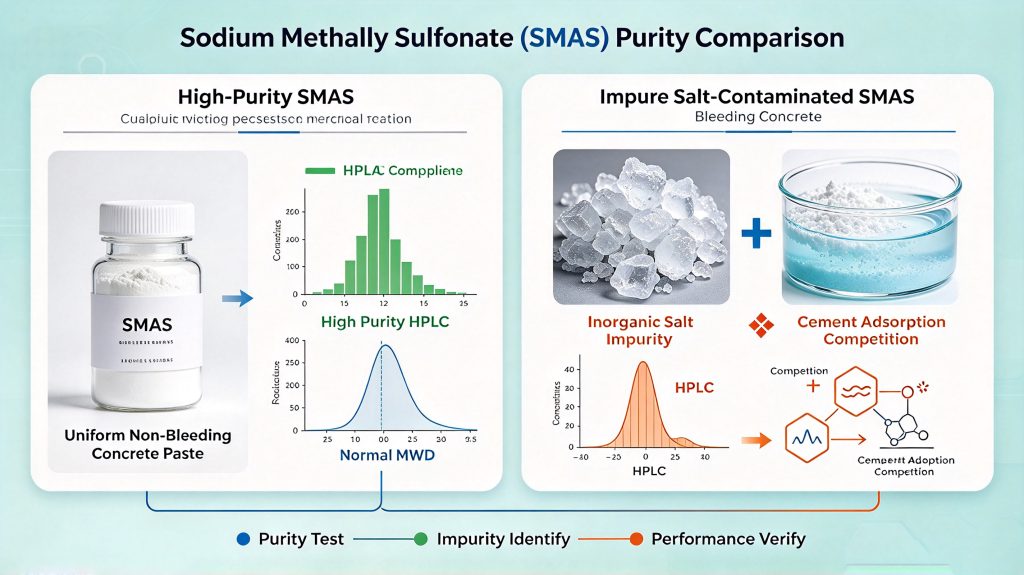
1. High Inorganic Salt Impurities in Low-Purity Sodium Methallyl Sulfonate Break Cement Adsorption Balance
The main impurities inside substandard Sodium Methallyl Sulfonate are sodium sulfate, sodium sulfite and unreacted neutral inorganic salts, which are unavoidable byproducts of incomplete SMAS purification.
- Excess free sulfate ions from low-purity Sodium Methallyl Sulfonate compete fiercely with sulfonate and carboxyl groups of PCE for active adsorption sites on cement C3A mineral surfaces. A large portion of synthesized PCE molecules cannot anchor stably on cement particles and remain suspended in free mixing water, weakening the colloidal network that locks free water inside concrete paste.
- Extra soluble salts introduced by low-purity SMAS raise the ionic strength of concrete pore solution, compressing the electric double layer of cement particles and reducing electrostatic repulsion uniformity. Cement flocs cannot disperse evenly, and free water separates upward under gravity, forming obvious surface bleed water.
- When manufacturers calculate feeding mass based on nominal SMAS weight without deducting salt impurities, the actual effective Sodium Methallyl Sulfonate dosage is far below the design molar ratio. Insufficient grafted sulfonate groups on PCE chains further worsen unstable dispersion and bleeding risk.
2. Inactive Organic Impurities of Low-Purity SMAS Destroy PCE Molecular Weight Uniformity
Low-purity Sodium Methallyl Sulfonate contains non-polymerizable allyl sulfonate fragments, hydrolyzed degradation products and homopolymer microgel residues that cannot participate in graft copolymerization with TPEG and acrylic acid.
- These inert impurities dilute the effective concentration of Sodium Methallyl Sulfonate during polymerization. The chain transfer regulation effect of SMAS becomes disordered, generating two extreme polymer fractions simultaneously: ultra-short low-molecular-weight PCE and overlong cross-linked high-molecular-weight polymer.
- Short-chain PCE molecules provide strong initial dispersion but lack water retention capacity, while overlong cross-linked polymers cause local agglomeration of cement particles. The mismatched dual molecular weight distribution cannot form a continuous cohesive paste matrix, so free water gradually separates out and causes bleeding.
- Unreacted homopolymer fragments of Sodium Methallyl Sulfonate produced by impure SMAS act as inert diluents in finished PCE mother liquor, reducing the effective concentration of functional polycarboxylate molecules and lowering the critical cohesive threshold of concrete mixtures.
3. Residual Unsaturated Impurities in Low-Purity Sodium Methallyl Sulfonate Trigger Excessive Air Entrainment
Unremoved light unsaturated byproducts from incomplete SMAS synthesis remain in low-purity Sodium Methallyl Sulfonate. During PCE polymerization, these substances generate stable tiny air bubbles inside concrete.
- Massive micro-air bubbles introduced by impure SMAS increase the internal void space of fresh concrete, damaging the compact packing of cement and aggregate particles. The bubble layer cannot bind mixing water tightly, accelerating water upward migration and visible bleeding laitance on concrete surfaces.
- Even with extra defoamer addition, residual active impurities from low-purity Sodium Methallyl Sulfonate continuously regenerate bubbles during concrete transportation and pouring, making bleeding and segregation recurring on construction sites.
4. Deliquescence and Uneven Dissolution of Low-Purity SMAS Cause Batch-to-Batch Dosage Deviation
Low-purity Sodium Methallyl Sulfonate absorbs moisture rapidly due to high salt content, forming sticky agglomerates with inconsistent effective SMAS content across bulk bags.
- When dissolving low-purity Sodium Methallyl Sulfonate for feeding, undissolved salt clogs pipelines and leads to uneven dropwise addition of active SMAS. Some reaction batches suffer severe shortage of Sodium Methallyl Sulfonate while others have surplus inorganic salts, creating unstable PCE performance between production runs.
- Batches synthesized with insufficient effective SMAS exhibit weak anti-bleeding performance directly after concrete mixing, showing clear water separation within 30 minutes of slump retention testing.
5. Accumulated Impurities From Long-Term Continuous Production Amplify Bleeding Defects
In continuous PCE production lines, inorganic salts and inert fragments carried by every batch of low-purity Sodium Methallyl Sulfonate accumulate in recycled mother liquor.
- Circulating waste liquid concentrates salt impurities from SMAS, which are fed back into new polymerization cycles and continuously interfere with the grafting reaction of Sodium Methallyl Sulfonate. The cumulative impurity effect gradually reduces the overall anti-segregation ability of all subsequent PCE products.
- For ready-mix concrete with long-distance transportation, PCE manufactured from low-purity SMAS loses water-locking performance quickly during transit, resulting in serious bleeding, aggregate sinking and surface laitance after pumping.
Practical Solutions to Eliminate Bleeding Caused by Low-Purity Sodium Methallyl Sulfonate
- Test the active effective content of each SMAS batch before feeding; adjust feeding mass proportionally to compensate impurity loss of Sodium Methallyl Sulfonate.
- Filter dissolved SMAS solution to remove insoluble salt agglomerates and inactive organic fragments before dropwise addition into reactors.
- Select high-purity Sodium Methallyl Sulfonate (active content ≥98.5%) with strictly controlled sodium sulfate impurities ≤0.3% to stabilize SMAS chain transfer and sulfonate grafting effects.
- Fine-tune acrylic acid and initiator matching ratios to offset molecular weight disorder triggered by low-purity SMAS impurities, restoring balanced cohesive property of finished PCE.