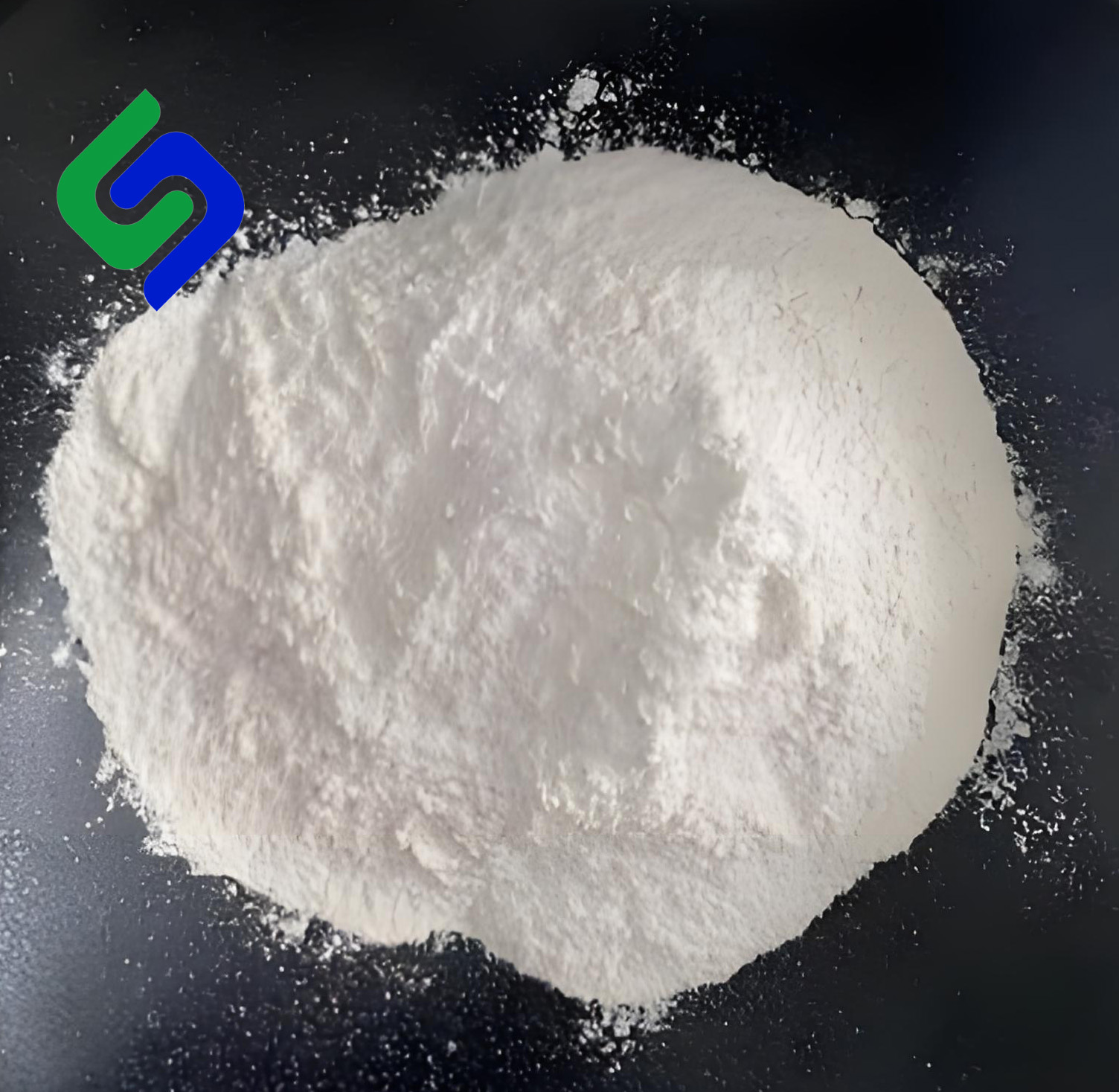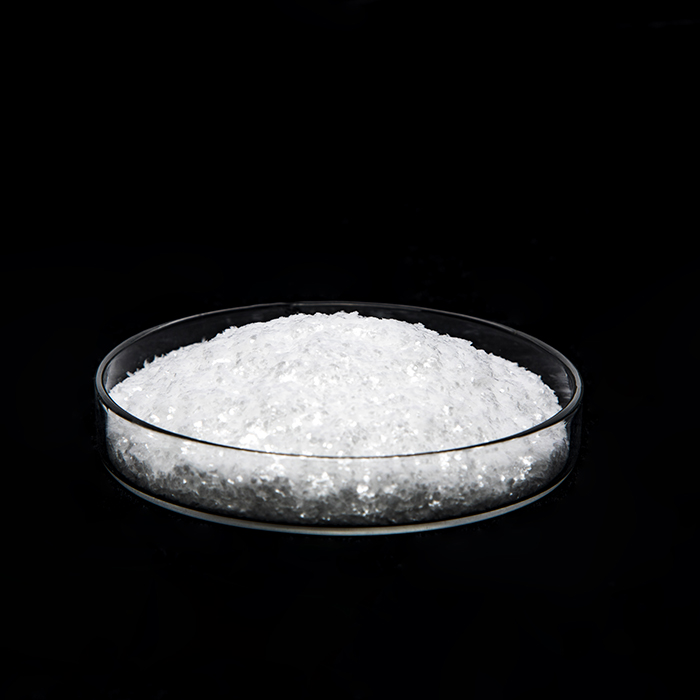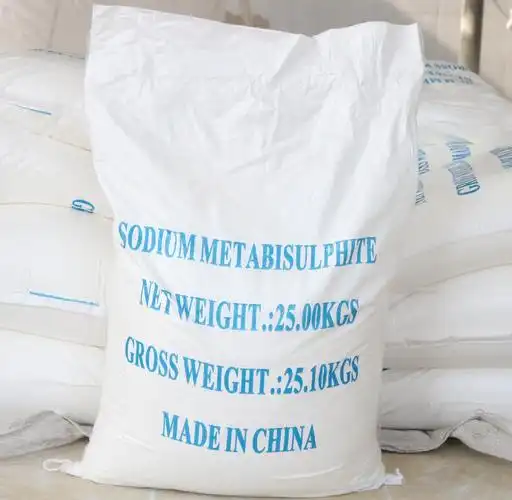
Sodium Methallyl Sulfonate, abbreviated as SMAS, is a highly hygroscopic sulfonated monomer for polycarboxylate superplasticizer production. During road, sea and bulk logistics transportation, SMAS cargo exposed to rainwater due to broken packaging, incomplete tarpaulin covering or warehouse transshipment leakage will rapidly absorb rain moisture, dissolve partially and form hard sticky agglomerates. Severe rain erosion leads to SMAS liquid runoff loss, degraded low-activity agglomerated SMAS waste, and extra sorting & disposal labor costs. This article proposes a full-chain set of pre-transport protection, in-transit emergency handling and post-arrival recycling methods to minimize sodium methallyl sulfonate raw material loss caused by rain-induced dissolution and caking, with natural layout of Sodium Methallyl Sulfonate and SMAS keywords throughout all sections.
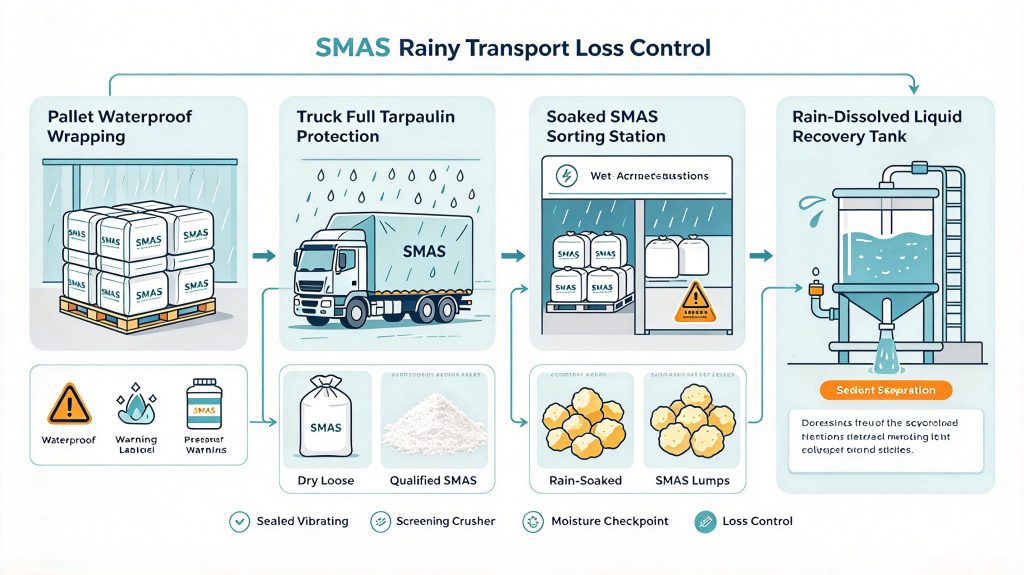
1. Pre-Shipping Reinforced Packaging & Rainproof Preparations (Fundamental Loss Reduction Measure)
Strengthening SMAS packaging and vehicle rainproof configuration eliminates direct rain contact with sodium methallyl sulfonate before shipment, avoiding initial dissolution and agglomeration.
1.1 Upgraded Double-Layer Sealed Moisture-Proof Packaging for SMAS
Replace ordinary thin PE inner liners with thickened high-toughness anti-tear plastic bags for all Sodium Methallyl Sulfonate sacks. Heat-seal the inner plastic mouth completely instead of simple tying, and wrap each SMAS bag with an extra thin waterproof PE film as secondary rain barrier. Double-layer packaging greatly slows rainwater infiltration even if outer woven sacks are scratched during loading.
- Label each pallet of SMAS with waterproof rainproof warning stickers; mark “Hygroscopic Sodium Methallyl Sulfonate, Keep Away From Rain” for logistics staff identification.
1.2 Pallet Integral Waterproof Wrapping Before Loading
Stack SMAS sacks neatly on standard wooden plastic pallets, then wrap the whole pallet tightly with 5–8 layers of stretch waterproof film to form an integrated rainproof unit. The film fully covers pallet sides, top and bottom gaps to prevent rainwater seepage between stacked SMAS bags during transit.
1.3 Vehicle Rainproof Inspection Before Departure
Check truck tarpaulins for holes, cracks and loose binding ropes; repair damaged tarpaulins or replace with new thickened PVC waterproof tarpaulins. Lay a whole waterproof rubber mat on the vehicle cargo floor to block rainwater splashing from road puddles and prevent bottom SMAS sacks from soaking and dissolving. For container shipping, seal all container door rubber strips and cover SMAS pallets with independent rainproof covers inside the cabin.
2. Real-Time In-Transit Emergency Operations To Stop Further SMAS Dissolution Loss
Once transport drivers discover rain leakage, rapid standardized emergency handling can cut down continuous rain erosion of Sodium Methallyl Sulfonate and reduce dissolved runoff loss.
- Pull over to a covered shelter or indoor transfer warehouse immediately; avoid continuing driving in heavy rain which splashes more rain onto exposed SMAS cargo.
- Cover exposed SMAS pallet areas with spare emergency waterproof tarpaulins and fasten all binding belts tightly to block further rain infiltration.
- Tilt the vehicle cargo floor slightly to drain accumulated rainwater on the rubber mat out of the carriage, preventing rainwater from pooling and soaking the bottom layer of SMAS sacks to form dissolved SMAS liquid outflow.
- Separate partially soaked SMAS pallets from dry intact Sodium Methallyl Sulfonate batches with waterproof partition boards to stop cross-moisture transfer and expand agglomeration scope.
- For long-distance sea transportation, arrange daily cabin humidity inspection; turn on container dehumidification equipment when encountering rainy coastal weather to lower air moisture around SMAS stock.
3. Post-Arrival Classified Sorting To Recover Usable SMAS & Cut Discard Loss
After rainy transportation, soaked SMAS must be sorted by damage degree to recycle qualified agglomerated Sodium Methallyl Sulfonate instead of scrapping the entire batch directly, drastically reducing raw material waste.
3.1 Grade 1: Slightly Damp SMAS With Soft Surface Lumps (Max Recoverable Batch)
Only the outer surface of SMAS bags absorbs a small amount of rainwater, inner Sodium Methallyl Sulfonate remains white and loose without obvious dissolution runoff.
- Handling: Unpack in low-humidity sealed workshop, send soft agglomerated SMAS into fully enclosed vibrating screening machine to crush lumps into uniform powder; test moisture and active content of recovered SMAS. After proportionally adjusting feeding weight to compensate slight activity loss, this batch of sodium methallyl sulfonate can be directly applied to conventional PCE production without waste.
3.2 Grade 2: Moderately Soaked SMAS With Local Dissolved Sticky Clumps
Partial SMAS inside sacks dissolves into thick sticky blocks, but no large-area liquid SMAS runoff loss occurs.
- Handling: Manually pick out fully dissolved hard agglomerates for separate low-grade formula consumption; collect the remaining semi-dry SMAS powder, perform low-temperature air drying under 40℃ to remove excess rain moisture, then filter and test indicators. Recovered SMAS can be mixed with dry qualified sodium methallyl sulfonate at a 1:3 ratio for ordinary water-reducing agent production, avoiding total scrapping.
3.3 Grade 3: Severely Rain-Soaked SMAS With Mass Dissolved Liquid Loss
SMAS sacks are fully broken by rain erosion, lots of sodium methallyl sulfonate dissolves and flows out mixed with rainwater, residual material turns dark yellow hard lumps with severely reduced active content.
- Handling: Collect all residual solid-liquid SMAS mixture into sealed dedicated barrels, conduct small pilot copolymerization tests. If activity meets low-standard admixture requirements, reuse for low-cost construction PCE formulas; only completely failed degraded SMAS after testing shall be disposed as hazardous waste.
4. Logistics Process Management Optimization To Reduce Rain Exposure Risk
Long-term standardized logistics management minimizes the probability of SMAS being soaked by rain during transportation from factory to warehouse.
- Arrange SMAS loading and delivery in weather windows without forecast heavy rain; suspend shipment if continuous rain is predicted to avoid road transit rain risks.
- Train logistics loading and driving teams on SMAS hygroscopic characteristics; formulate operation SOP for rainy emergency protection and soaked material sorting recovery.
- Sign loss compensation clauses with logistics suppliers, requiring carriers to fully implement pallet waterproof wrapping and tarpaulin protection; deduct freight fees for cargo loss caused by inadequate rainproof measures to strengthen operator supervision.
- Build temporary covered transfer shelters at loading yards and destination warehouses, so SMAS pallets can be moved indoors quickly during sudden rain without prolonged open-air exposure.
5. Waste Liquid & Residue Recovery Treatment For Dissolved SMAS Rain Mixture
Collect all rainwater mixed with dissolved SMAS runoff to recycle usable sodium methallyl sulfonate components instead of direct discharge loss.
- Guide rainwater mixed with dissolved SMAS into sealed sedimentation tanks; stand still to separate undissolved SMAS solid precipitates, filter and recover solid SMAS residues for secondary drying and reuse.
- Treat supernatant liquid containing diluted SMAS via low-temperature vacuum concentration to recover high-concentration SMAS solution, which can be added into the dissolving tank of normal production batches to make up raw material consumption.
- Avoid direct drainage of SMAS rain mixture, which not only wastes sodium methallyl sulfonate resources but also increases factory wastewater COD treatment costs.
Consequences Of Ignoring Rainproof Protection & Recovery Measures For Transported SMAS
- Partial SMAS dissolves and flows away with rainwater, causing direct raw material economic loss of sodium methallyl sulfonate.
- Rain-soaked SMAS forms massive hard agglomerates; untreated lumpy SMAS blocks automatic feeding pipelines and triggers uneven copolymerization, producing gel impurities in PCE mother liquor.
- Large batches of soaked unseparated SMAS are forced to be scrapped, raising overall polycarboxylate production raw material cost.
- Dissolved SMAS rain wastewater without recovery increases environmental treatment burden and compliance risks of factory discharge standards.