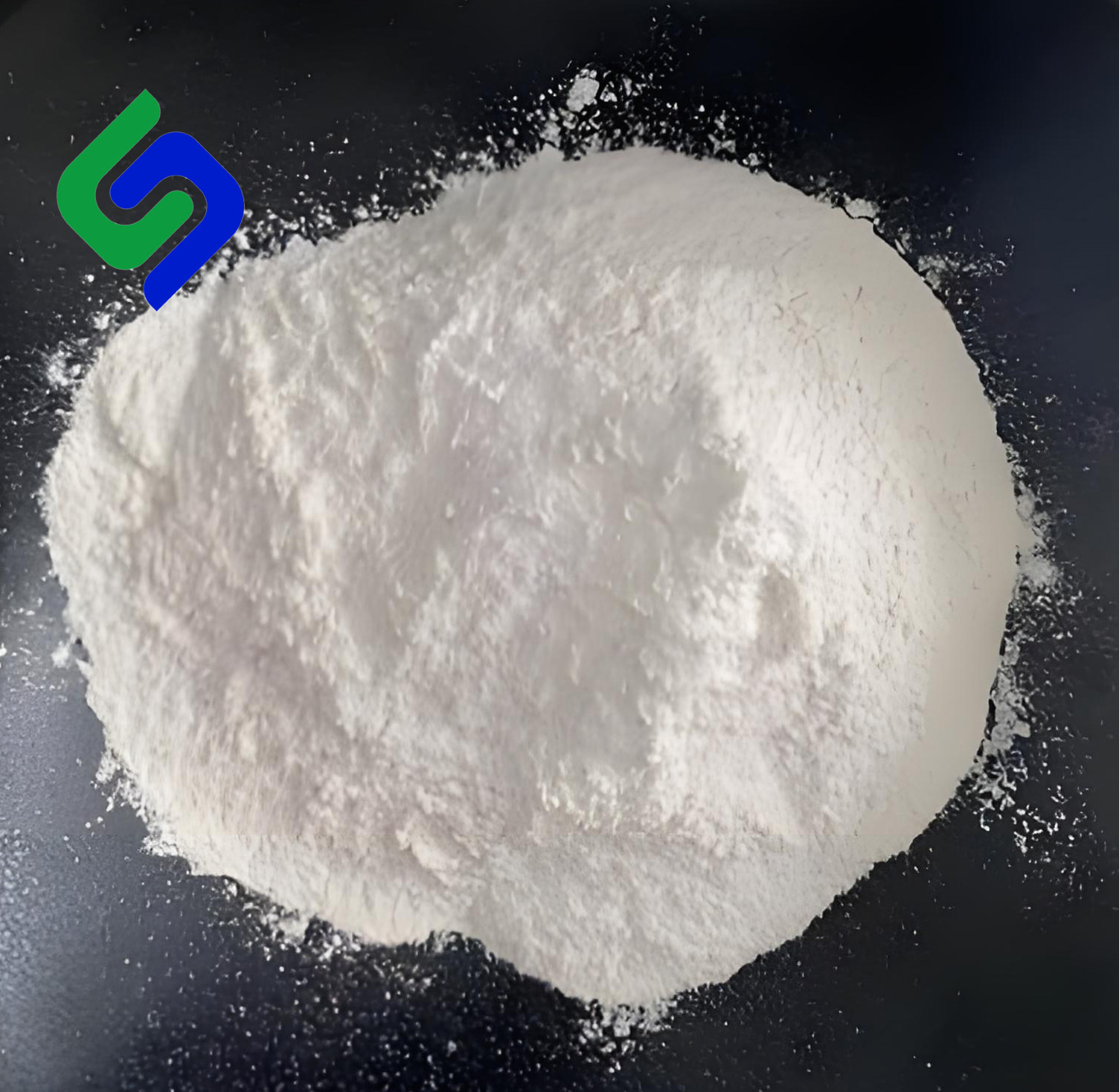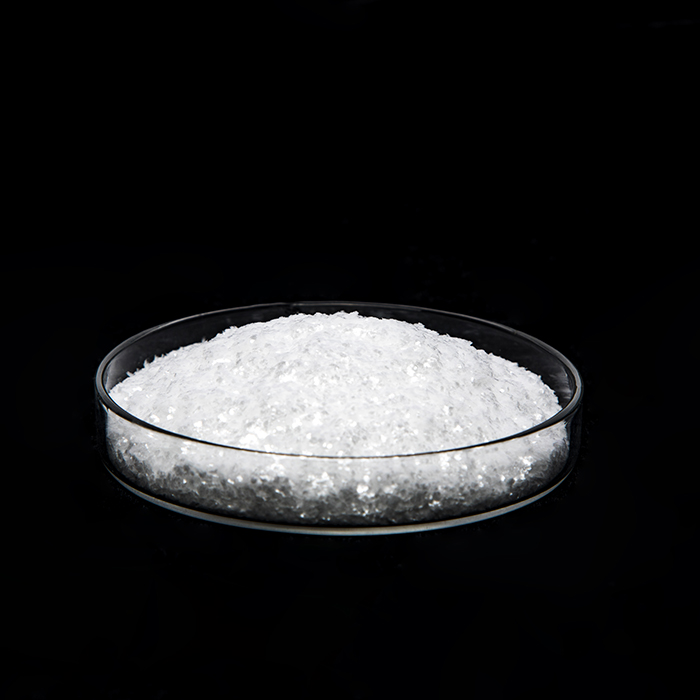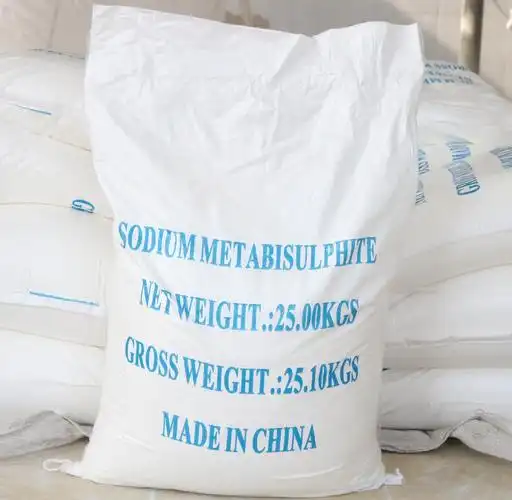
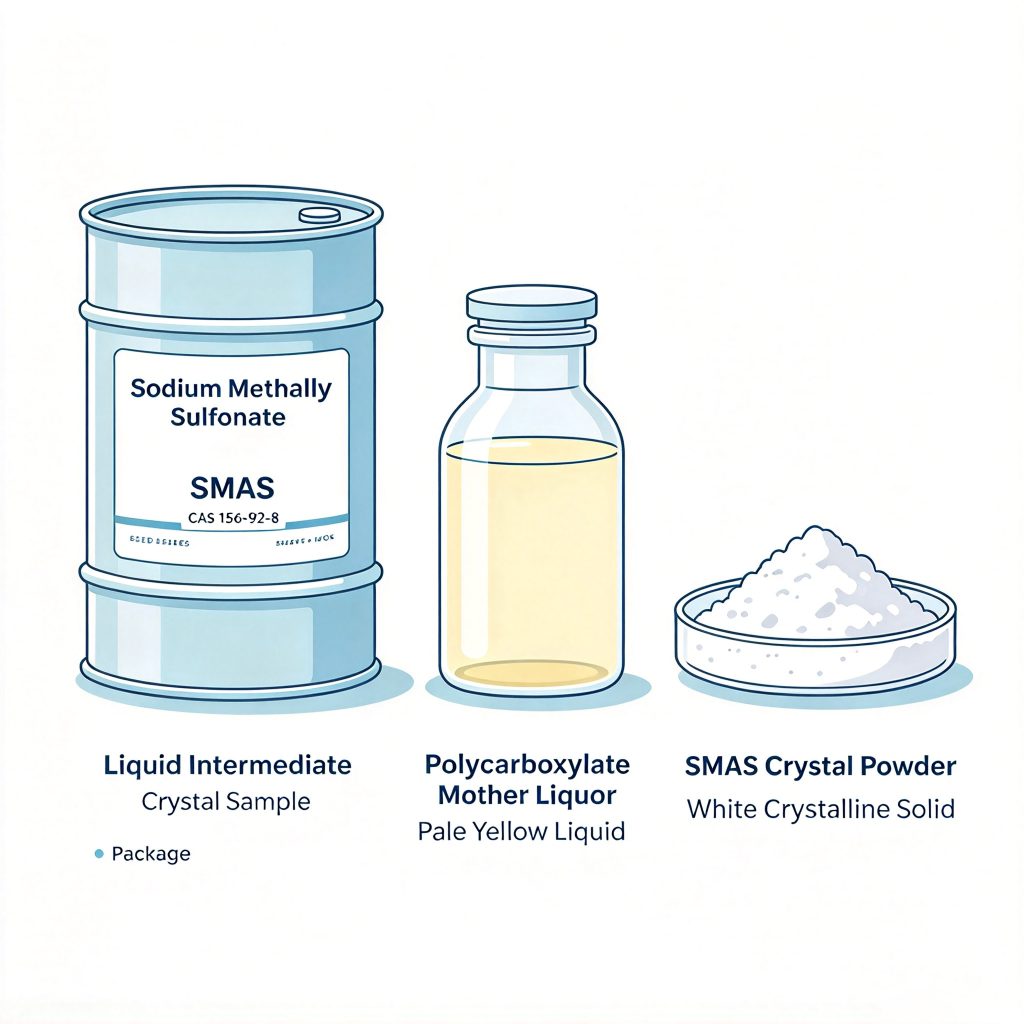
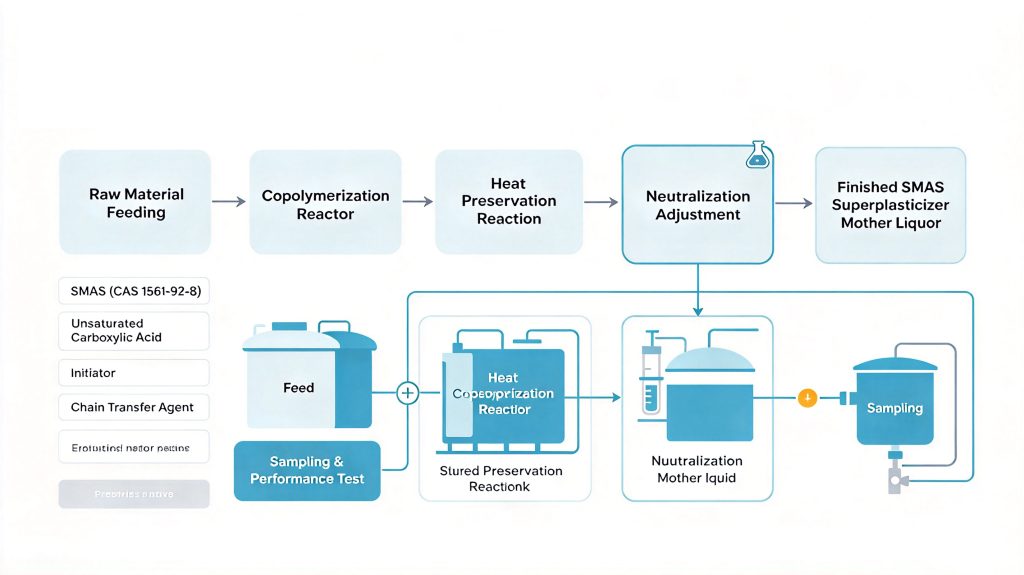
Sodium methallyl sulfonate (SMAS, CAS NO.:1561-92-8) is a core sulfonate functional monomer for producing polycarboxylate superplasticizer mother liquor. SMAS-synthesized mother liquor delivers outstanding water reduction and slump retention, widely used for manufactured sand concrete. However, manufactured sand has high stone powder content, irregular particle shape and poor grading; when the formula is mismatched, concrete segregation, bleeding and aggregate sinking easily occur, even if SMAS-based mother liquor shows good dispersion performance. Proper formula adjustment targeting SMAS dosage, paste rheology, aggregate grading and binder system is essential to stabilize manufactured sand concrete and eliminate segregation risk.
Root Causes of Segregation in Manufactured Sand Concrete Using SMAS-Synthesized Mother Liquor
Before formula optimization, it is necessary to clarify why segregation happens with sodium methallyl sulfonate modified superplasticizer mother liquor.
1. Excessive water reduction from improper SMAS proportion in mother liquor
Sodium methallyl sulfonate (CAS NO.:1561-92-8) introduces strong electrostatic repulsion groups. Too high SMAS fraction in polymerization increases water-reducing capacity excessively. If the water-binder ratio is not adjusted downwards correspondingly, free water rises, paste viscosity drops, and coarse aggregate separates from mortar.
2. Poor manufactured sand properties
Over-high stone powder content, unbalanced fineness modulus or excessive flaky particles of manufactured sand destroy the mortar skeleton. Even qualified SMAS-synthesized mother liquor cannot compensate for bad sand grading, and segregation tends to appear at high slump.
3. Unreasonable binder and mineral admixture matching
Lack of fine powder or unreasonable fly ash/slag blending ratio reduces mortar viscosity. Low paste volume cannot wrap coarse aggregates sufficiently, which is a typical segregation trigger for pumped manufactured sand concrete.
4. Over-dosage of SMAS superplasticizer mother liquor on site
Field operators often add extra SMAS-synthesized mother liquor to pursue higher fluidity. Excessive superplasticizer disperses cement particles overmuch, breaks the suspension system and causes bleeding and aggregate settlement.
5. Mismatched rheology of SMAS mother liquor for manufactured sand
SMAS mother liquor developed for river sand concrete usually has low viscosity retention. Manufactured sand concrete needs higher mortar viscosity; directly applying such mother liquor will lead to unstable suspension and segregation.
Targeted Formula Optimization Strategies to Prevent Segregation
1. Optimize SMAS monomer feeding ratio during mother liquor synthesis
Adjust the mole percentage of sodium methallyl sulfonate (SMAS, CAS NO.:1561-92-8) in the polycarboxylate polymerization formula. Reduce excessive SMAS dosage if the mother liquor shows ultra-high water reduction and weak viscosity building. Cooperate with small amounts of viscosity-enhancing monomers to balance dispersion and paste thickening, specially customized for manufactured sand. Do not blindly increase SMAS to improve slump retention.
2. Control manufactured sand index and adjust sand rate
Control manufactured sand fineness modulus within 2.6–3.0, reasonably limit stone powder content (usually 7–12%). Raise sand fraction appropriately to increase mortar volume, so that enough mortar can coat coarse aggregate and support the skeleton to stop sinking. Avoid too low sand rate.
3. Optimize binder system and paste volume
Match fly ash, slag powder or limestone powder to adjust the powder gradation. Moderate fine powder improves mortar viscoelasticity. Guarantee enough paste volume; insufficient paste is one of the most common reasons for segregation in manufactured sand concrete.
4. Strictly control water-binder ratio and superplasticizer dosage
Set a maximum dosage cap for SMAS-synthesized mother liquor according to lab trial mixing. Avoid adding mother liquor blindly on site. If high flowability is required, optimize powder grading instead of only increasing SMAS superplasticizer.
5. Introduce viscosity-modifying component in composite formula
Compound the SMAS mother liquor with a suitable viscosity modifier or air-entraining agent at low dosage. It improves the yield stress of fresh mortar without obviously losing slump, which is effective for anti-segregation of pumped manufactured sand concrete.
6. Carry out pre-trial mixing before formal production
Every batch of incoming manufactured sand and SMAS-synthesized mother liquor must pass lab trial mix. Check segregation resistance, bleeding rate, slump flow and flow retention, and fine-tune the formula before mass batching.
Conclusion
Sodium methallyl sulfonate (SMAS, CAS NO.:1561-92-8) is a key monomer for polycarboxylate superplasticizer mother liquor. Segregation of manufactured sand concrete is seldom caused by SMAS itself; it mainly arises from mismatched SMAS proportion in mother liquor, poor aggregate grading, insufficient mortar viscosity and over-addition of superplasticizer. Optimizing SMAS monomer ratio in synthesis, adjusting sand rate and powder system, controlling water-binder ratio and doing trial mixing together can effectively avoid segregation and bleeding, ensuring stable pumping and construction performance of manufactured sand concrete.
FAQ About Sodium Methallyl Sulfonate (SMAS, CAS NO.:1561-92-8) Mother Liquor and Manufactured Sand Concrete Segregation
Q1: What function does sodium methallyl sulfonate (SMAS, CAS NO.:1561-92-8) play in superplasticizer mother liquor for manufactured sand concrete?
A1: SMAS provides sulfonate groups for the polycarboxylate molecular chain. It enhances electrostatic dispersion and slump retention of the mother liquor, helping manufactured sand concrete obtain stable fluidity for pumping construction.
Q2: Will higher SMAS content in mother liquor definitely cause segregation of manufactured sand concrete?
A2: Not absolutely. Excessively high SMAS proportion raises water-reducing power and reduces paste viscosity, which greatly increases segregation risk, especially for manufactured sand with unstable stone powder. The SMAS ratio must be customized for local manufactured sand through lab tests.
Q3: If manufactured sand concrete segregates, should we reduce the addition of SMAS-synthesized mother liquor first?
A3: Yes, it is the first quick adjustment. Reduce the superplasticizer mother liquor dosage and check bleeding and aggregate separation. Meanwhile verify sand rate, stone powder content and total powder volume, because aggregate quality issues also lead to segregation.
Q4: Is SMAS mother liquor suitable for all manufactured sand?
A4: No. SMAS-synthesized mother liquor needs formula tuning. Manufactured sand with high stone powder or poor particle shape requires lower water-reduction mother liquor and higher viscosity design by adjusting sodium methallyl sulfonate proportion and composite additives.
Q5: What test indicators can judge whether manufactured sand concrete mixed with SMAS mother liquor has segregation risk?
A5: Main test items include bleeding rate, visual aggregate separation, slump flow T50 time, static segregation rate and pipe-pumping simulation test. A longer T50 usually means better anti-segregation performance.
Q6: Can mineral powder replace adjusting SMAS formula to solve segregation?
A6: Mineral admixtures improve mortar viscosity, but they cannot fix an improperly designed SMAS mother liquor. The best solution is combining mother liquor molecular design (SMAS monomer ratio) and concrete mix proportion optimization.
References
[1] PubChem. Sodium methallylsulfonate, CAS 1561-92-8, Compound Data Sheet[EB/OL]. https://pubchem.ncbi.nlm.nih.gov/compound/Sodium-methallylsulfonate
[2] Journal of Building Materials. Rheology control and anti-segregation technology of manufactured sand concrete with polycarboxylate superplasticizer[J], 2022.
[3] RILEM TC 225-SCC. Self-compacting concrete segregation and bleeding test specification[R]. RILEM, 2014.
[4] ScienceDirect. Effect of sulfonate functional monomers on the rheological properties of polycarboxylate superplasticizer for manufactured sand concrete[J]. Construction and Building Materials, 2023.
[5] Sigma-Aldrich. Sodium methallyl sulfonate (SMAS) Monomer Specification for Polycarboxylate Admixture Synthesis[EB/OL]. https://www.sigmaaldrich.com