
The industrial synthesis process for Sodium Methallyl Sulfonate (SMAS) is well-established, with the mainstream route centered on the reaction of methallyl chloride and sulfites. High-purity standards typically require a main content of ≥ 99.0%.
Core Synthesis Process: The Sulfite Method
This is the most widely adopted industrial approach, prized for its readily available raw materials and relatively simple operation. The core reaction is a nucleophilic substitution between methallyl chloride (MAC) and sodium sulfite (Na₂SO₃) , aimed at producing high-purity SMAS.
A critical technical challenge is that industrial-grade MAC often contains isocrotyl chloride (ICC) , a difficult-to-separate isomer. ICC does not participate in the desired reaction but instead significantly inhibits the main reaction rate, extending reaction times several-fold.
To overcome this, a classic improved process employs a two-step recycling method:
- Step 1 (Consume MAC): A feedstock rich in ICC is reacted with an excess of sodium sulfite solution, ensuring that MAC is nearly completely consumed.
- Step 2 (Consume Sulfite): The unreacted ICC is separated, and an excess of industrial-grade MAC/ICC mixture is added to the solution to react until the sulfite is nearly exhausted.
- Recycling: The organic phase rich in ICC remaining after Step 2 is recovered and reused in Step 1.
Through this recycling process, not only can cheap industrial-grade raw materials be effectively utilized and the reaction inhibition problem be overcome, but the distillation step in the first stage can also recover a by-product of ICC with a purity as high as 99.9%. The total reaction time for the entire process can be controlled within 3.5 hours.
In addition to the mainstream sulfite method, there are also the direct sulfonation method (reaction of isobutylene with an SO₃ complex) and the tributyl phosphate method. However, these are less widely used industrially due to higher equipment requirements or more complex operations.
Industrial Purity Standards Explained
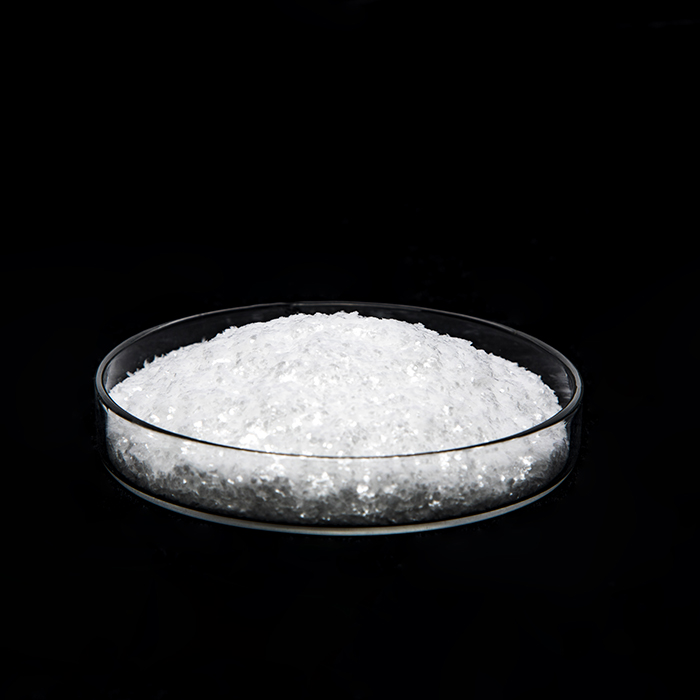
High-purity industrial SMAS typically appears as white flake crystals. A typical industrial quality standard is as follows. These indicators collectively ensure the stable performance of SMAS as a functional monomer:
| Test Item | Typical Specification |
|---|---|
| Main Content (Purity) | ≥ 99.5% |
| Chloride | ≤ 0.03% |
| Sulfate | ≤ 0.03% |
| Sulfite | ≤ 0.02% |
| Water Insolubles | ≤ 0.01% |
| Loss on Drying | ≤ 0.3% |
| Iron (Fe) | ≤ 0.2 ppm |
Key Application Areas
High-purity SMAS is an important functional monomer. Its sulfonate group imparts excellent thermal stability and water solubility to polymers. Key applications include:
- Third Monomer for Acrylic Fibers: As a comonomer, it significantly improves the dyeability of acrylic fibers.
- Polycarboxylate Superplasticizers: It provides the crucial sulfonate group for this high-performance concrete admixture and is one of its core raw materials.
- Other Polymers: Used in water treatment agents, oilfield chemicals, coating additives, and other fields.
Synthesis Process And Purity Standard Of Industrial Sodium Methallyl Sulfonate (SMAS, CAS 1561-92-8)
1. Core Industrial Synthetic Route (Mainstream Nucleophilic Substitution Method)
Reaction Principle & Equation
Raw materials: Methallyl Chloride (MAC) + Anhydrous Sodium Sulfite
CH2=C(CH3)CH2Cl+Na2SO3→CH2=C(CH3)CH2SO3Na+NaCl
Sulfite anion substitutes chloride to form SMAS; NaCl is the main inorganic byproduct.
Full Continuous Production Flow
- Raw Material MixingDissolve excess anhydrous Na2SO3 in deionized water; molar ratio Na2SO3:MAC=1.05∼1.1:1to fully convert MAC. Add trace PEG phase transfer catalyst to accelerate interfacial reaction. Adjust pH to 8–10 with dilute NaOH to suppress MAC hydrolysis.
- Constant-Temperature Sulfonation ReactionStir & heat to 70–90°C, hold 4–6 h. Strict temperature control prevents double bond dimerization & self-polymerization side reactions.
- Hot Filtration DesalinationEvaporate partial water to concentrate solution; high-temperature centrifugal filtration removes precipitated NaCl to cut chloride impurities. Mother liquor is recycled to reduce raw material waste.
- Gradient Cooling CrystallizationCool concentrated filtrate stepwise to precipitate SMAS crystals; separate crude crystals by centrifugation.
- Refining & DryingWash crystals with saturated SMAS aqueous solution to lower residual salt; vacuum low-temp drying avoids thermal decomposition of vinyl groups.
- Two Finished Forms Output
- Anhydrous powder (99.0%–99.8%): direct packaging
- 35% aqueous liquid: dilute refined concentrated liquid, filter & fill drums
Auxiliary Sulfonation Route (Small-Scale Lab Only)
Methallyl sulfonation with SO3 / chlorosulfonic acid, neutralized by NaOH. High equipment corrosion risk, high cost, not adopted for mass industrial production.
2. Key Process Control for High Purity
- Excess sodium sulfite guarantees complete MAC conversion, eliminates residual chloralkane impurities
- Low-temperature vacuum drying (<100°C): protect reactive double bond, maintain high monomer activity
- Multi-stage desalination + crystal washing: strictly control chloride ion
- Closed reaction system with light shielding: prevent UV-induced dimer byproducts
- Continuous online HPLC monitoring to stabilize batch consistency
3. Industrial Grade Purity Standards
Grade 1: Super High-Purity Powder (For Polycarboxylate Superplasticizer / Acrylic Fiber)
| Test Item | Standard Index |
|---|---|
| SMAS Assay (dry basis) | ≥99.5% |
| Sodium Chloride (NaCl) | ≤0.035% |
| Sodium Sulfite (Na2SO3) | ≤0.02% |
| Moisture | ≤0.50% |
| Iron (Fe) | ≤0.4 ppm |
| Dimer impurity | ≤0.10% |
| Appearance | Uniform white flaky crystal, free-flowing, no caking |
Grade 2: General Industrial Powder (Water Treatment / Emulsion Polymerization)
- SMAS ≥99.0%, NaCl ≤0.08%, moisture ≤1.0%
Grade 3: 35% Aqueous Liquid (Ready-to-Use Auxiliary)
- Active SMAS: 35±0.5 wt%
- pH: 7.0–9.0
- Low turbidity, no suspended solids or polymer gel
4. How Purity Affects Downstream Polymer Production
- Excess chloride ions reduce polycarboxylate water-reducing rate and slump retention
- Residual sulfite consumes initiators, causes incomplete polymerization & unstable molecular weight
- Vinyl dimer impurities deteriorate fiber dyeing performance and polymer dispersibility
- Ultra-low heavy metals avoid catalyst poisoning during copolymerization
5. Packaging & Storage Matching High-Purity Product
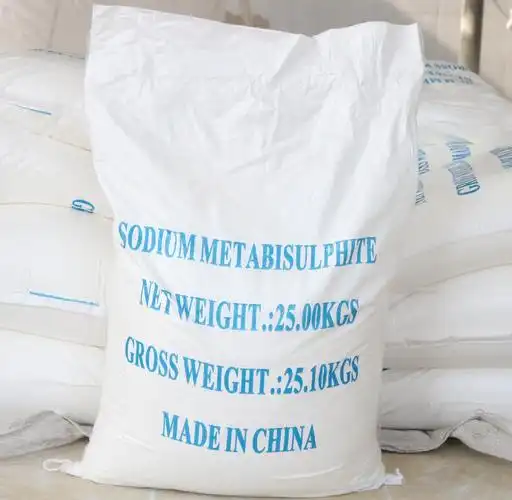
- Powder: 25kg PE-lined vacuum woven bags, anti-moisture sealing
- Liquid: 25kg HDPE drums / 1000L IBC tanks, antifreeze storage required
- Shelf life: 24 months sealed powder; 18 months liquid