Complete Quality Control System for Sodium Methallyl Sulfonate (SMAS) for Water Treatment Copolymer Production
To guarantee stable scale inhibition, dispersion performance and smooth polymerization with acrylic acid, full-chain quality control covers raw material acceptance, production synthesis purification, finished product testing, storage and feeding management.
1. Strict Raw Material Incoming Inspection (Front-End Barrier)
1.1 Key purity index acceptance standards
- Active SMAS content ≥95%: Low activity leads to insufficient sulfonate grafting ratio in copolymer, weak anti-scale capacity.
- Residual methallyl chloride monomer ≤0.1%: Excess unsaturated chloride causes foaming and inhibits free radical polymerization.
- Total heavy metal ions (Fe³⁺, Cu²⁺, Mn²⁺) ≤10 ppm: Trace transition metals terminate polymerization, widen molecular weight distribution.
- Residual sulfite/sulfate ≤0.3%: Reducing sulfite consumes persulfate initiator and interferes biocides in circulating water.
- Moisture content ≤0.2%: High moisture triggers crystal agglomeration, uneven feeding during synthesis.
- Chloride ion ≤0.5%: Excess Cl⁻ accelerates reactor metal corrosion and introduces metal impurities.
1.2 Mandatory detection items for each batch
- HPLC assay of active ingredient
- Atomic absorption spectrometry for heavy metal content
- Potentiometric titration for residual sulfite and chloride
- Karl Fischer moisture test
- Foam stability test (simulate water dosing environment)
- Polymerization compatibility test (small lab copolymerization with acrylic acid to verify conversion rate)
Reject batches failing any index; do not dilute or mix substandard SMAS with qualified products.
2. Synthesis & Purification Process Control for High-Purity SMAS
2.1 Controlled synthesis reaction parameters
- Control neutralization pH within 7.5–8.5: Over-acidity produces insoluble sulfonic acid precipitate; over-alkalinity generates allyl alcohol by-products.
- Low-temperature dropwise addition of methallyl chloride to avoid local high temperature self-polymerization of monomers.
- Adequate stirring to eliminate local supersaturation, reduce dimeric allyl sulfonate impurities.
2.2 Multi-stage purification to remove impurities
- Activated carbon decolorization & metal adsorption: Adsorb organic oligomers and trace heavy metal complexes, eliminate product yellowing tendency.
- Membrane microfiltration: Filter out insoluble salt particles and polymer impurities to avoid agglomerated solid residues.
- Vacuum low-temperature concentration & crystallization: Avoid thermal degradation of SMAS at high temperature; separate inorganic salt impurities via recrystallization.
- Solvent washing with low-polar mixed solvent: Strip surface adsorbed residual monomers and free water, prevent finished SMAS caking.
3. Standardized Finished Product Post-Treatment
- Vacuum drying at 45–55 ℃: Strictly control residual moisture below 0.2%, prohibit high-temperature drying over 60 ℃ to prevent C-S bond cleavage and monomer decomposition.
- Vibration sieving (80–120 mesh): Remove large agglomerated lumps, obtain uniform particle size powder for stable feeding.
- Anti-caking treatment (optional for long-term storage): Add 0.1–0.3% inert fumed silica, which does not interfere subsequent copolymerization and water treatment performance.
- Homogenization mixing: Blend full batch evenly to eliminate local concentration deviation and ensure consistent quality barrel to barrel.
4. Finished Product Full-Performance Testing Before Factory Delivery
Beyond basic chemical indexes, complete water treatment application simulation tests:
- Copolymer synthesis simulation test: Polymerize with acrylic acid under standard process; test conversion rate, molecular weight distribution and finished copolymer appearance.
- Static scale inhibition test: Detect calcium carbonate/calcium phosphate inhibition rate of SMAS-based copolymer to confirm sulfonate functional activity.
- Iron oxide dispersion test: Evaluate anti-fouling ability for metal oxide suspended solids.
- High-salinity tolerance test: Verify no precipitation of copolymer under high-hardness simulated industrial water.
- Thermal stability test: Heat SMAS solution at 90 ℃ for 8h, check for decomposition and impurity generation.
Only batches passing all simulation application tests can be delivered for water treatment chemical production.
5. Storage & Transportation Quality Protection
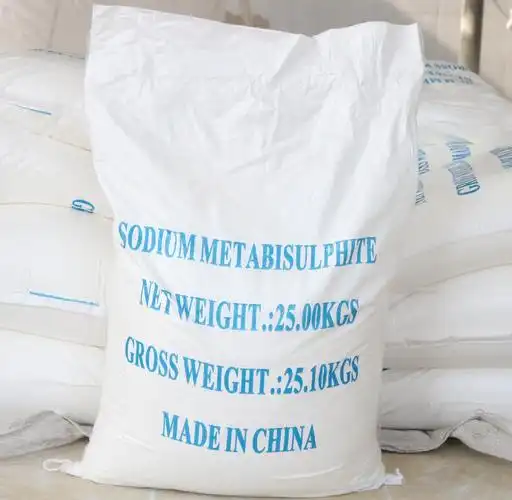
- Packaging: Double-layer sealed PE barrels with aluminum foil inner liner to isolate moisture and air, prevent hygroscopic agglomeration.
- Warehouse environment: Constant temperature 15–25 ℃, relative humidity ≤45%, dehumidification system running continuously.
- Stacking management: Avoid long-term static compression; flip barrels every 7 days to prevent bottom compaction caking. Storage cycle limited to maximum 30 days.
- Isolated storage: Separate SMAS barrels from strong oxidants, acid, cationic water treatment agents to avoid cross-contamination.
- Transportation: Cover rainproof tarpaulins, prevent barrel rupture and water ingress; avoid high-temperature exposure during summer transit.
6. On-Site Feeding & Usage Quality Control for Water Treatment Factories
- Pre-feeding inspection: Check barrel appearance for leakage, lumping and discoloration before opening; discard severely caked and yellowed materials.
- Low-humidity feeding workshop: Equip dehumidifier, minimize open exposure time of SMAS powder.
- Pre-dispersion pretreatment: Suspend SMAS in anhydrous methanol with high-speed stirring to break minor agglomerates before adding to polymerization reactor.
- Batch record traceability: Record incoming batch number, test data, feeding amount and copolymer finished product quality for full lifecycle tracking over 5 years.