
1. Fluid Loss Additives
Used to control the filtration of drilling fluid into formations, forming a compact filter cake to stabilize the wellbore and protect the reservoir.
| Typical Product | Technical Principle & Advantages | Disadvantages & Limitations |
|---|---|---|
| Polyanionic Cellulose (PAC) | Advantages: Fast dissolution, effective viscosity-building and filtration control, good salt tolerance, widely used. | Limited temperature resistance (usually <150°C), poor tolerance to polyvalent ions (Ca²⁺, Mg²⁺). |
| Sulfonated Copolymers (e.g., SMAS-AM copolymers) | Advantages: High-temperature resistance (up to 200°C+), excellent salt and calcium/magnesium contamination tolerance, irreplaceable in challenging drilling operations. | Higher production cost, relatively complex manufacturing process. |
| Modified Starch | Advantages: Environmentally friendly, biodegradable, low cost, effective in conventional freshwater systems. | Prone to microbial degradation (requires biocides), very poor temperature and salt tolerance. |
2. Viscosifiers
Used to build and maintain the viscosity and gel strength of drilling fluids, suspend drill cuttings, and carry them to the surface.
| Typical Product | Technical Principle & Advantages | Disadvantages & Limitations |
|---|---|---|
| Biopolymers (Xanthan Gum, XC) | Advantages: Highly efficient viscosifier at low concentrations, excellent shear-thinning behavior (thins when pumped, thickens at rest), outstanding suspension capability. | Moderate temperature resistance (≈120°C), susceptible to microbial degradation, requires alkaline environment. |
| High-Molecular-Weight Polyacrylamide (PAM) | Advantages: Significant viscosity-building effect, some shale inhibition capability. | Poor salt and calcium tolerance, ineffective in high-salinity brines, susceptible to mechanical shear degradation. |
| Modified Cellulose (e.g., CMC) | Advantages: Widely available, low cost, functions as both viscosifier and fluid loss reducer. | Limited temperature and salt tolerance, viscosity highly dependent on pH. |
3. Corrosion Inhibitors
Used to suppress electrochemical corrosion of drill strings and casings caused by acidic gases (CO₂, H₂S) and brines.
| Typical Product | Technical Principle & Advantages | Disadvantages & Limitations |
|---|---|---|
| Filming Amines (Imidazolines, Quaternary Ammonium Salts) | Advantages: Form an adsorptive film on metal surfaces to block corrosive agents; highly efficient at low dosages, excellent in CO₂ environments. | Less effective in high H₂S environments; may interfere with subsequent crude oil processing (e.g., demulsification). |
| Passivating Oxidizers (Nitrites) | Advantages: Induce metal surface “passivation” for rapid corrosion protection. | High toxicity, significant environmental concerns; may cause pitting corrosion in high-chloride environments. |
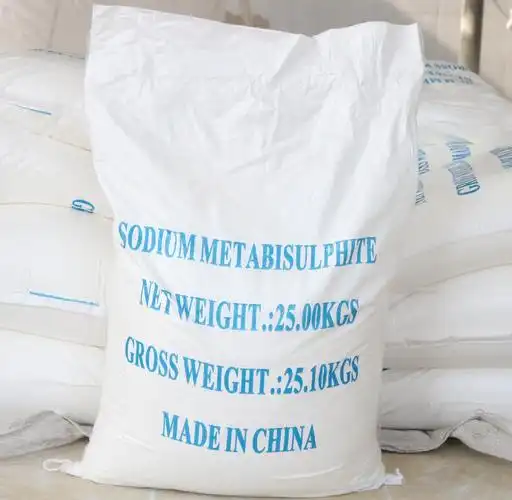
| Inorganic Salts (Oxygen Scavengers, e.g., Sodium Sulfite) | Advantages: Remove the root cause—dissolved oxygen—cost-effectively. | Only effective against oxygen corrosion; ineffective for CO₂/H₂S corrosion; may increase solid content. |
4. Demulsifiers
Used to break water-in-crude-oil emulsions, achieving oil-water separation to meet pipeline export specifications.
| Typical Product | Technical Principle & Advantages | Disadvantages & Limitations |
|---|---|---|
| Polyether Demulsifiers (Block Polyethers) | Advantages: Current industry standard; break emulsions by disrupting the oil-water interfacial film. Highly adaptable—EO/PO ratios can be tailored to crude properties (wax, asphaltene content). | Highly specific; rarely “one-size-fits-all,” often requiring “one-well-one-formula” customization; may be less effective for extra-heavy or aged crudes. |
| Resin-Based Demulsifiers (Phenolic Resin Polyethers) | Advantages: High molecular weight enables bridging effects; more effective for aged and heavy crudes. | Complex synthesis, high cost, often viscous solids at room temperature, inconvenient to handle. |
| Cationic Demulsifiers (Quaternary Ammonium Salts) | Advantages: Highly effective against negatively charged O/W (oil-in-water) emulsions. | Narrow application range, potential adverse reactions with formation fluids, rarely used. |
5. EOR Polymers & Surfactants
Used in Enhanced Oil Recovery to increase displacement fluid viscosity or reduce oil-water interfacial tension, mobilizing “residual oil” from rock pores.
| Typical Product | Technical Principle & Advantages | Disadvantages & Limitations |
|---|---|---|
| Partially Hydrolyzed Polyacrylamide (HPAM) | Advantages: The most widely used EOR polymer; strong viscosity-building, relatively low cost, mature technology. | Critical weakness: Poor salt (especially divalent ions) and temperature tolerance (<75°C); severe viscosity loss in high-temperature/high-salinity reservoirs; susceptible to shear and chemical degradation. |
| High-Temperature High-Salinity (HTHS) Polymers (e.g., Hydrophobically Associating Polymers, SMAS-based Polymers) | Advantages: Incorporation of special monomers (e.g., SMAS) or associative structures significantly enhances temperature (>85°C) and salt (high Ca²⁺/Mg²⁺) tolerance, suitable for harsh reservoirs. | Complex production process, high cost (2–5 times that of HPAM), potentially slower dissolution rate. |
| Petroleum Sulfonate Surfactants | Advantages: Traditional workhorse; effective at reducing interfacial tension; derived from crude oil, good compatibility. | Moderate salt tolerance; less effective in low-acid-number crudes; complex composition, variable quality. |
| Alkylbenzene Sulfonate Surfactants | Advantages: Well-defined, controllable structure; customizable alkyl chain length and sulfonation degree for specific reservoirs; stable performance. | Higher cost than petroleum sulfonates; still sensitive to polyvalent ions. |
| Nonionic-Anionic Hybrid Surfactants | Advantages: Combine the strengths of both types; exceptional salt and hard water tolerance; demonstrate superior stability and activity in high-temperature high-salinity reservoirs. | A current research frontier; difficult synthesis, highest cost, not yet widely commercialized. |
💡 Summary & Technology Trends
In summary, the development of high-performance oilfield chemicals continuously revolves around solving the four core challenges: temperature resistance, salt tolerance, environmental friendliness, and precision.
- Multifunctional Integration: Developing “all-in-one” additives combining fluid loss control, viscosity building, inhibition, etc., to simplify formulations.
- Green Feedstocks: Utilizing natural or bio-based materials (e.g., modified cellulose, plant extracts) to develop more environmentally friendly products.
- Intelligent Design: Employing computational molecular modeling to design “customized” polymers and surfactants for specific reservoir ion profiles and temperatures.
- Harsh Condition Solutions: As exploration moves into deepwater and ultra-deep wells, demand grows for chemicals with extreme performance limits for temperature (>200°C), pressure, and salinity.
I hope this detailed breakdown is helpful. If you would like a deeper analysis of specific product selection for particular reservoir conditions (e.g., high Ca²⁺/Mg²⁺ brines, ultra-high temperatures), I can provide further insights.